
1. Introduction: When Health Problems Start Earlier Than Expected
Not very long ago, diseases like diabetes or high blood pressure were usually something people worried about after the age of 45 or 50. It was often seen as a part of ageing — something that came later in life.
But today, that pattern is changing.
Doctors across India are increasingly seeing people in their late 20s and early 30s being diagnosed with metabolic health issues. Young professionals who otherwise seem active and busy are discovering problems like high blood sugar, fatty liver, or borderline blood pressure during routine health checkups.
This trend is not just anecdotal. India’s Economic Survey 2025-26 highlighted that rising obesity, diabetes and other chronic health conditions are becoming a growing concern due to lifestyle changes, urban living and diet patterns.
You can read the report summary here:
https://www.ndtv.com/health/obesity-diabetes-and-digital-addiction-rising-in-india-economic-survey-2025-26-healthcare-insights-10906770

In simple words, the way we live today is slowly shaping the way our health behaves tomorrow.
As preventive medicine expert Kenneth H. Cooper once said:
“Health is not valued until sickness comes.”
For many people today, that realisation is happening earlier than expected.
2. What Are Lifestyle Diseases?
You may often hear doctors talk about Lifestyle Diseases.
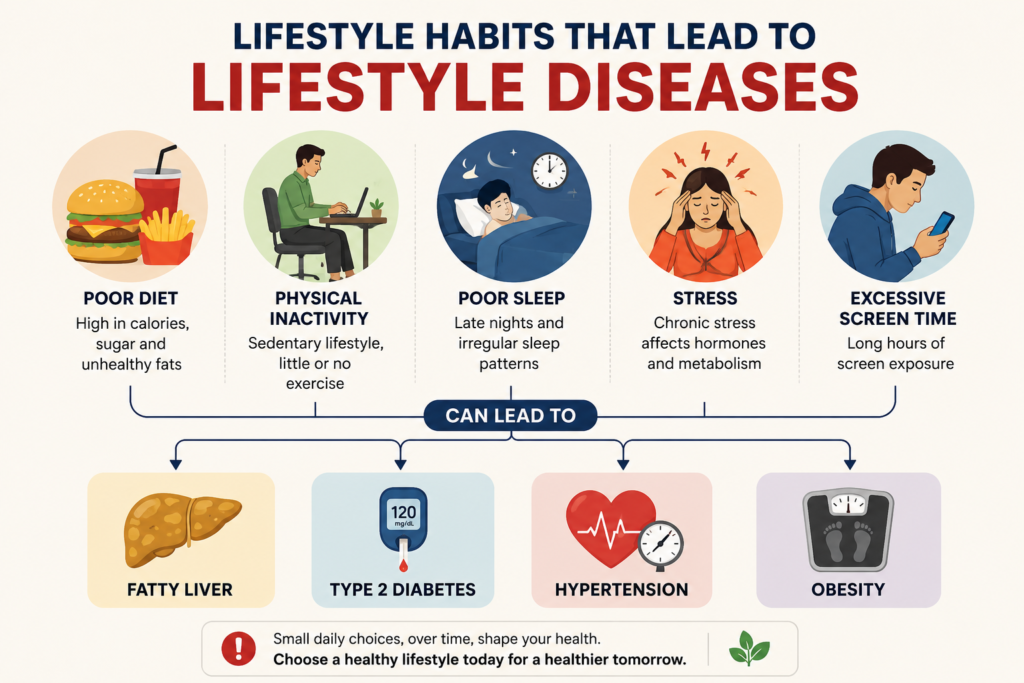
These are health conditions that develop gradually over time and are strongly influenced by our daily routines — things like what we eat, how much we move, how we sleep and how we deal with stress.
Some of the most common examples include:
Non-Alcoholic Fatty Liver Disease
Type 2 Diabetes
Hypertension
Obesity
According to the World Health Organisation, non-communicable diseases such as these are responsible for the majority of deaths globally, and lifestyle behaviours like poor diet, physical inactivity and stress are major contributing factors.
More information here:
https://www.who.int/india/health-topics/noncommunicable-diseases
What makes these diseases different is that they usually do not appear suddenly. They develop slowly through years of habits.
3. Why Are Lifestyle Diseases Increasing in Young Indians?
If we look at how everyday life has changed in the last two decades, the reasons become easier to understand.
Long hours of sitting and desk-based work
Many young professionals spend 8–10 hours a day sitting in front of screens. Work from home, long commutes and digital jobs have reduced everyday physical activity.
Even when people exercise occasionally, long hours of sitting can still affect metabolism.

Late nights and irregular routines
Sleep patterns have changed significantly, especially in urban environments.
Late work hours, social media, streaming platforms and screen exposure often push bedtime later and later. Poor sleep is known to affect hormones related to metabolism and appetite.
Growing dependence on processed and convenience foods
Food habits have also shifted. Packaged snacks, ready-to-eat meals and food delivery apps have made convenience foods a regular part of modern diets.
The Economic Survey 2025-26 also noted that increasing consumption of ultra-processed foods is contributing to rising obesity trends in India.

Stress is becoming part of everyday life
Work pressure, financial responsibilities and fast-paced urban lifestyles have increased stress levels for many young people.
Long-term stress can influence hormones, digestion and metabolism, which indirectly affects overall health.
There is a well-known reminder often shared in health discussions:
“Take care of your body. It’s the only place you have to live.”
This quote by motivational speaker Jim Rohn reflects an important truth about long-term health.
4. The Silent Nature of Lifestyle Diseases
One of the biggest challenges with lifestyle diseases is that they often develop quietly.
A person may feel perfectly normal while internal changes slowly take place.
Blood sugar may gradually rise.
Fat may start accumulating in the liver.
Blood pressure may slowly increase.
In many cases, these conditions are discovered only during routine health tests.
A recent screening campaign in India found that about one in four people screened had diabetes and two in five had hypertension, showing how common these conditions have become.

This is why doctors often describe lifestyle diseases as “silent conditions” that build up over time.
5. A Thought to Take Forward
There is a simple but powerful idea often repeated in preventive health:
“The groundwork for all happiness is good health.”
This observation by philosopher Leigh Hunt reminds us how closely health is connected to everyday life.
Lifestyle diseases are deeply influenced by the way we live — the food we eat, the sleep we get, the stress we experience and the activity we do.
At Rogtham, the belief is that understanding this connection is an important first step. When people become aware of how lifestyle patterns influence health, they are better able to make small, sustainable changes that support long-term wellbeing.
Because sometimes, improving health does not begin with a big step.
It begins with understanding the small habits we repeat every day.