

Is obesity caused by overeating?
You have probably heard this at least once — from a doctor, a relative, or both: “Just eat less and walk more.”
And maybe you have tried that. Cut the rice. Skipped dessert. Started morning walks. Lost a few kilos, felt good about it — and then watched it slowly come back. Not because you gave up. Not because you stopped trying.
So what is actually going on?
The honest answer is that weight is more complicated than most of us have been told. And if you are Indian, there are some specific things about how your body works that make this even more important to understand.

Obesity is a medical condition, not a character flaw
This matters more than it sounds.
For a long time, weight gain was seen as a simple problem: eat too much, move too little, gain weight. Fix those two things, problem is solved. But research over the last two decades has made it clear that obesity involves hormones, genetics, sleep, stress, gut bacteria, medications, and how your body processes food at a cellular level.
The World Health Organization classifies obesity as a chronic medical condition — the same category as diabetes or high blood pressure. That does not mean food and movement do not matter. They absolutely do. But it means that for many people, “eat less and walk more” addresses only part of what is happening. Which is why it works for a while — and then stops.
If you have tried and struggled, this is not always a question of willpower. Something else may need to be looked at.
Why the Indian body is different — and what that actually means
Here is something most people in India are not told clearly enough: the standard BMI chart was built using data from European populations. It was not designed with the Indian body in mind.
Why does that matter? Because at the same weight and height, Indians tend to carry more body fat — especially around the belly — compared to people of European descent. Research shows that Indians have roughly 3 to 5 percent higher body fat than Europeans at the same BMI.
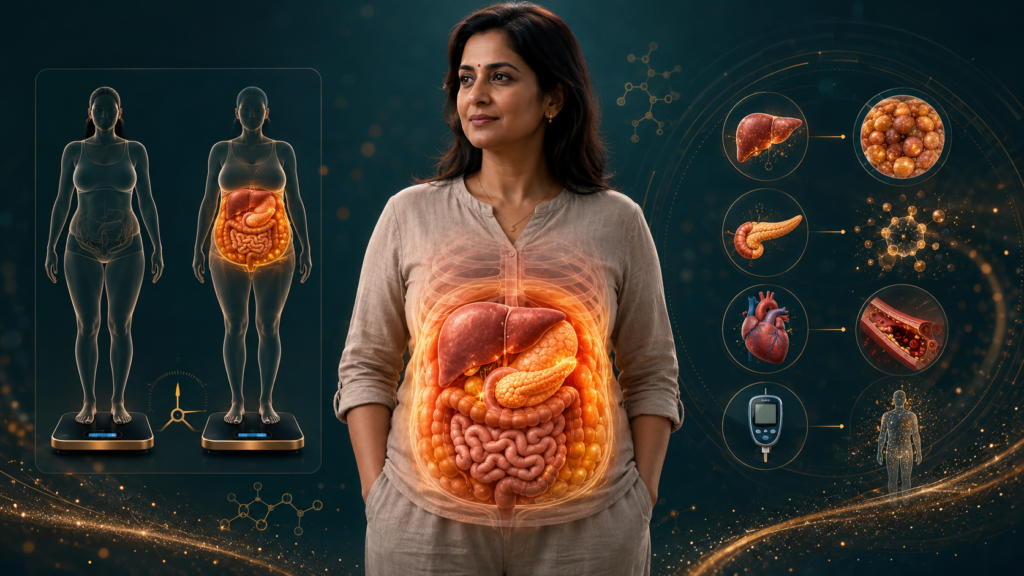
Obesity and inflammation
More importantly, that extra fat tends to sit around the organs — the liver, the pancreas, the intestines — not under the skin. This type of fat, called visceral fat, is the kind that actually does damage. It interferes with how insulin works, raises inflammation, and puts stress on the heart and liver. The fat you can pinch on your arm is largely cosmetic. The fat sitting inside your belly is not.
What this means in practice:
A person whose BMI looks perfectly “normal” on a standard chart can still have a significant amount of this dangerous internal fat. You could be a 38-year-old woman, weigh 62 kg, look reasonably slim, and already have early signs of insulin resistance or fatty liver. This is sometimes called the “thin-fat” pattern, and it is genuinely common among Indians.
This is also why Indians develop type 2 diabetes at a younger age and at lower body weights than people in Western countries. It is not about diet alone. It is about where the body is storing fat, and how sensitive the body is to that fat.
Your waist tells you more than your weight
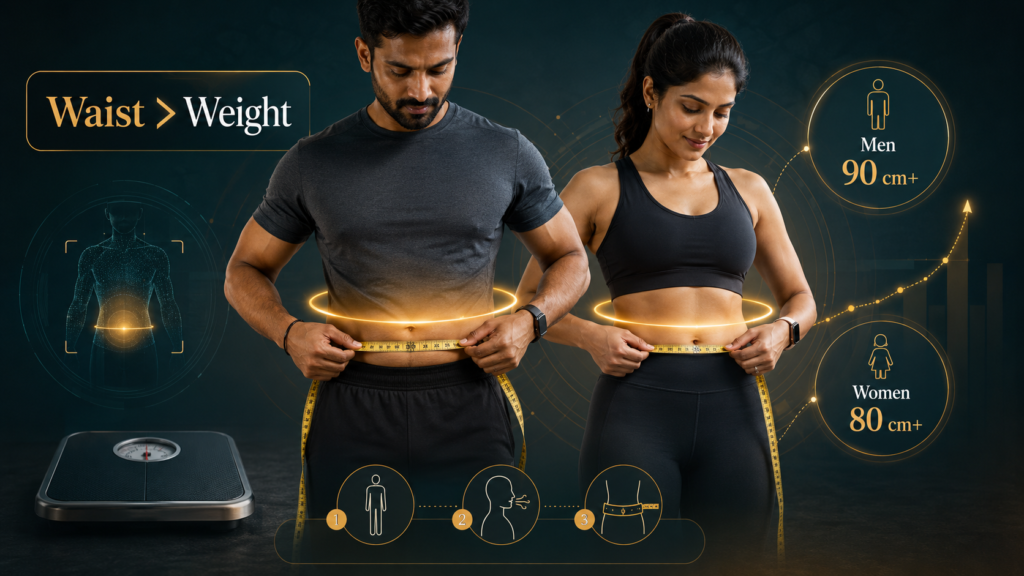
Given all of this, waist measurement is actually a more useful number to watch than the number on the scale.
To measure correctly: stand normally, breathe out, and measure around your belly at the level of your navel — tape snug but not tight, not over thick clothing.
For Indians, the risk thresholds are:
Men: 90 cm or above is a concern
Women: 80 cm or above is a concern
These are lower than what you might see on international charts — because, again, the risk kicks in earlier for South Asian bodies.
A rising waist measurement — even if your weight has not changed — is worth paying attention to.
The things that drive weight gain have nothing to do with “eating too much”
Here is a short and genuinely useful list:
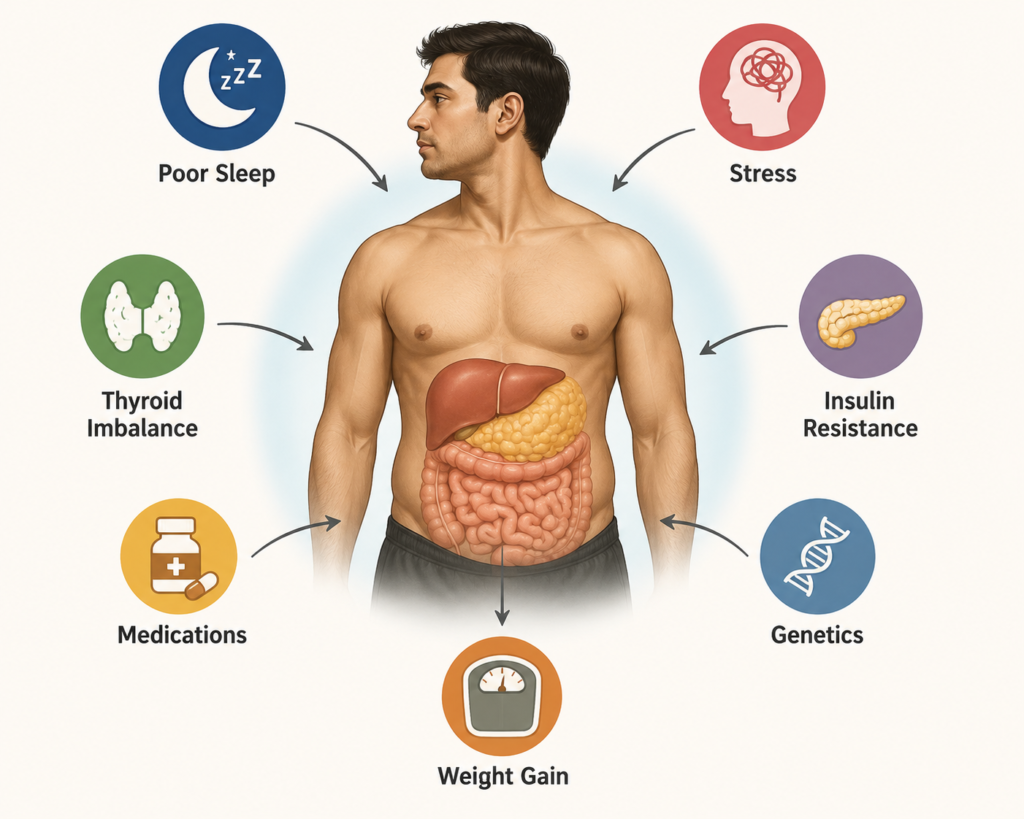
Sleep. Poor sleep raises cortisol (a stress hormone) and ghrelin (a hunger hormone) while lowering leptin (the hormone that tells you you are full). One bad night affects your appetite the next day. Chronic poor sleep, over months and years, makes weight gain significantly more likely.
Stress. Chronic stress keeps cortisol elevated. Cortisol tells the body to store fat — specifically around the abdomen. This is not a metaphor. It is a biological response.
Thyroid. An underactive thyroid slows the metabolism noticeably. If your weight has been creeping up despite no real change in eating, and you also feel tired, cold, or constipated, your thyroid is worth checking.
PCOD/PCOS. This is one of the most common and most overlooked factors in women. PCOS causes insulin resistance, which makes the body store more fat — especially belly fat. The weight then makes the PCOS worse, and the cycle continues. This is a hormonal condition, not a discipline problem.
Medications. Certain common medications — including some antidepressants, steroids, blood pressure drugs, and diabetes medications — can cause weight gain directly. If your weight increased after starting a new medication, that connection is worth raising with your doctor.
Genetics. Some people’s bodies are genuinely more efficient at storing energy. This is not an excuse, but it is a real variable. Two people eating the same food and doing the same exercise can have different outcomes because of how their bodies are wired.
None of this means you do not influence your own weight. You do. But it does mean that a diet plan alone — without addressing these other factors — is often incomplete.
Obesity symptoms and Effects of obesity
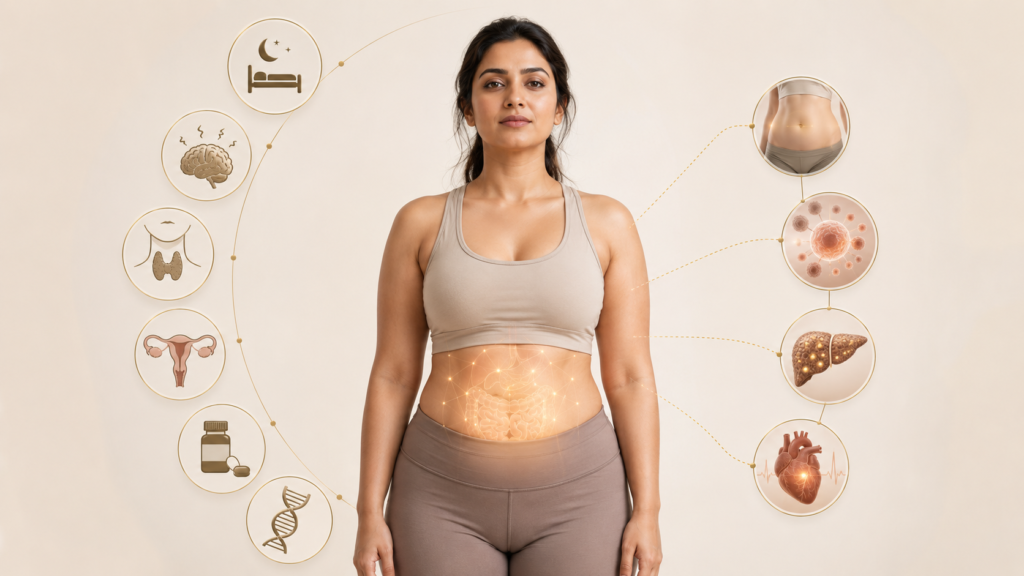
What extra belly fat can quietly do over time?
You do not usually feel visceral fat building up. There is no clear signal. This is why it matters to pay attention even before things feel serious.
Over time, excess abdominal fat is associated with:
Rising blood sugar — often years before a diabetes diagnosis
High triglycerides (a type of fat in the blood) and low HDL (the “good” cholesterol)
Fatty liver — extremely common in India, and often missed because it causes no symptoms early on
High blood pressure
Irregular periods and worsening PCOS symptoms in women
Sleep apnoea — where breathing repeatedly interrupts during sleep, leaving you exhausted and unaware of why
Most of these conditions develop silently. A routine blood test will often catch them before you feel anything. This is a case where knowing early genuinely makes a difference.
diet plan for weight loss and obesity diet plan
When a diet plan is not enough
If one or more of the following applies to you, it is worth speaking to a doctor — not just a dietitian:
You have tried to lose weight seriously more than twice and regained it each time
Your waist is above the numbers mentioned above
Your blood sugar, cholesterol, or liver tests are outside the normal range
You have PCOS, irregular periods, or possible thyroid symptoms
Your weight increased after starting a medication
You snore heavily, feel exhausted even after sleeping, or have been told you stop breathing in your sleep
Weight is affecting your mood, confidence, or daily life
A good doctor will not just hand you a diet sheet. They will look at your hormones, your sleep, your medications, your blood work, your family history — and help figure out what is actually going on.
One thing worth knowing about Indian data
India’s National Family Health Survey (NFHS-5, 2019–21) found that about 1 in 4 Indian adults is now overweight or obese. In cities, it is closer to 1 in 3.
What is more striking is the abdominal obesity data: a 2023 analysis in The Lancet found that nearly 40% of Indian women have abdominal obesity when measured by waist circumference — even if their overall weight looks normal on a BMI chart.
That gap between what the scale shows and what is actually happening inside is the whole point of this article.
The short version of everything above
Obesity is a medical condition, not a failure of willpower
The standard BMI scale was not designed for Indian bodies — your waist measurement is often more useful
Indians store more fat around the organs, which is why diabetes, fatty liver, and heart disease show up at lower weights here than in the West
Sleep, stress, hormones, medications, and genetics all contribute to weight, not just food
Many of the health effects build silently, which is why early assessment matters
If diets have not worked long-term, there may be something that has not been looked at yet
How Rogtham can help
If you have been told to “eat less and walk more” and still feel stuck, it may be time for a proper assessment — one that looks at your whole picture, not just the number on the scale.
At Rogtham, our specialists assess the factors that standard advice tends to miss: your hormones, your metabolic markers, your sleep, your history, and what your waist and blood tests are actually telling us. No judgement. No generic advice. Just a clear starting point.
Book an obesity assessment with Rogtham — and find out what your body is actually trying to tell you.

Frequently Asked Questions About Obesity
Questions about obesity symptoms, the Effects of obesity, and whether Is obesity caused by overeating are addressed below.
1. Is obesity just because I eat too much?
No. Weight gain is not only about food. Hormones, sleep, stress, genetics and medical conditions also play a big role.
2. Can I have health risks even if my weight looks normal?
Yes. Many Indians have a normal weight but high belly fat, which can increase the risk of diabetes, fatty liver and heart problems.
3. What is a healthy waist size for Indians?
Men: below 90 cm
Women: below 80 cm
Anything above this can increase health risk.
4. Why is belly fat dangerous?
Belly fat sits around your organs and can affect blood sugar, cholesterol, liver and heart health.
5. Why do I lose weight and then gain it back?
Your body slows down metabolism and increases hunger after dieting. If the root cause isn’t addressed, weight often comes back.
6. Can thyroid or PCOS cause weight gain?
Yes. Both can affect hormones and metabolism, making it easier to gain weight and harder to lose it.
7. When should I see a doctor for weight gain?
If your waist is high, weight keeps coming back, or you have issues like fatigue, irregular periods, snoring, or abnormal blood test results, it’s better to get checked.
This article is for general information only and does not replace personalized medical advice. If you have specific health concerns, please speak to a qualified doctor.