

Diabetes Does Not Affect Only Blood Sugar
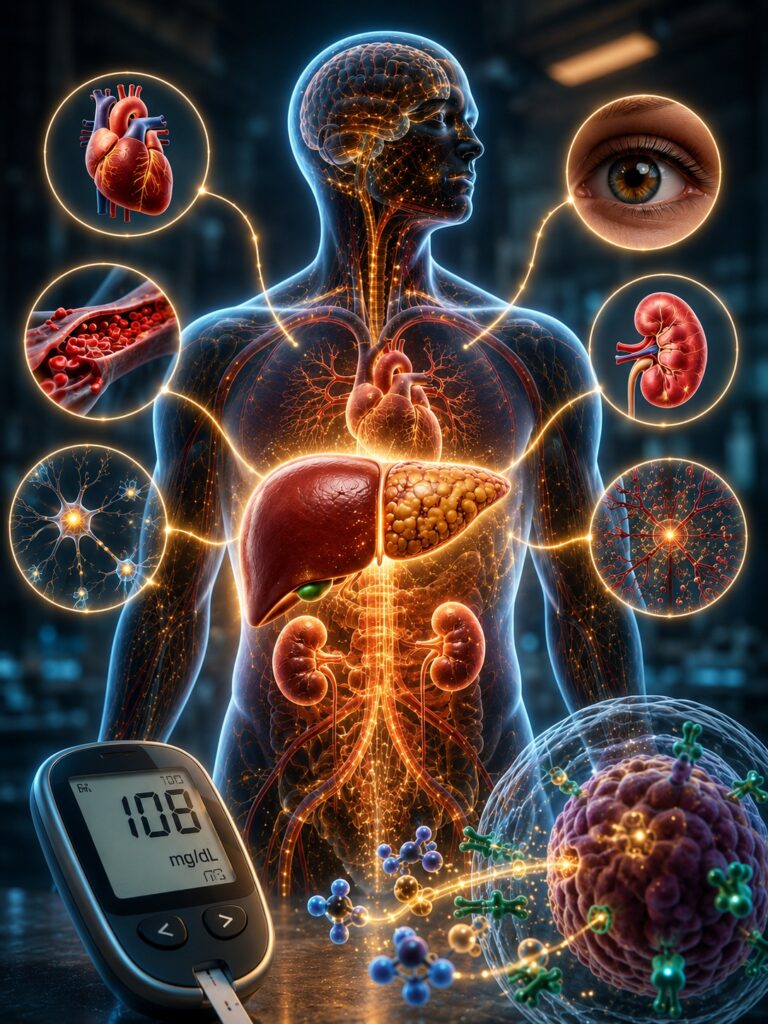
When we hear the word diabetes, most people immediately think about high blood sugar. But diabetes does not affect only sugar levels. It can slowly affect the heart, kidneys, eyes, nerves, blood vessels — and one very important organ that many people forget about: the liver.
Your liver is like the body’s processing factory. It helps manage sugar, fat, digestion, cholesterol, energy storage, and detoxification. So when diabetes is not well controlled, the liver is also under pressure.
One of the most common liver problems seen in people with type 2 diabetes is fatty liver disease. The tricky part is that fatty liver often does not show clear symptoms at first. Many people discover it only during an ultrasound, SGPT/SGOT test, or routine health check-up.
That is why if you have diabetes, checking only fasting sugar, post-meal sugar, and HbA1c is not enough. Your liver health matters too.
Quick takeaway:
Diabetes is not just a sugar problem. It is a metabolic condition, and your liver is deeply connected to it.
What Is the Connection Between Liver and Diabetes?
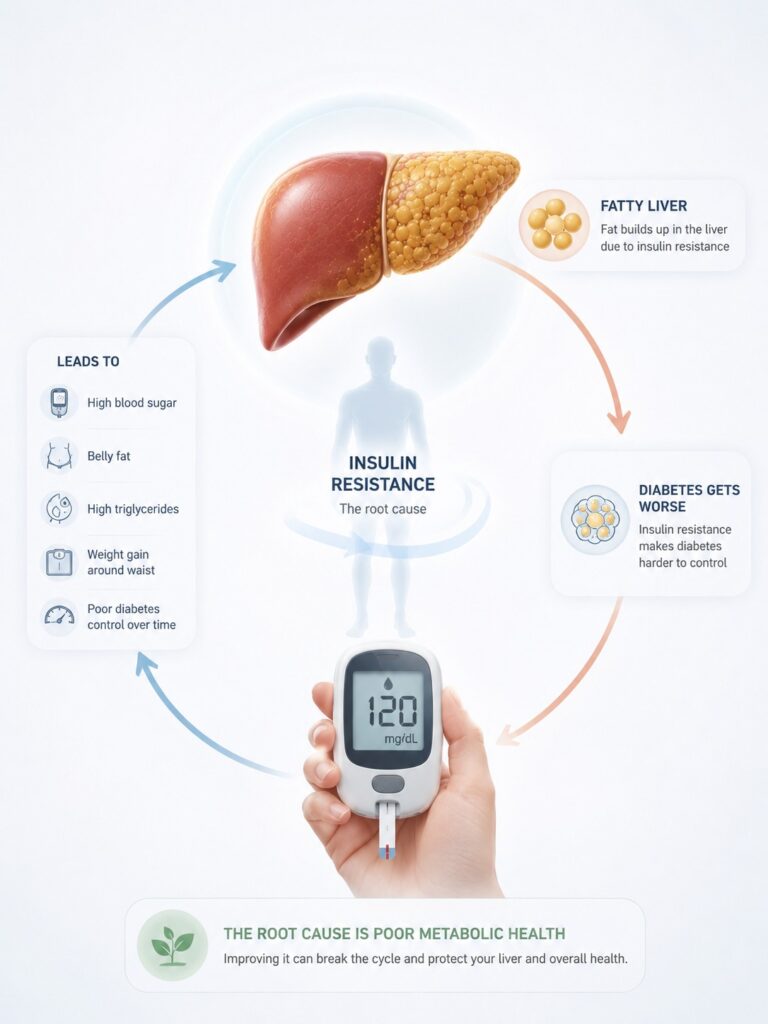
The connection between liver and diabetes is mainly linked to insulin resistance.
Insulin is a hormone that helps move sugar from your blood into your cells for energy. In type 2 diabetes, the body does not use insulin properly. This is called insulin resistance.
When insulin resistance happens, the body struggles with both sugar and fat control. This can lead to:
- High blood sugar
- Belly fat
- High triglycerides
- Weight gain around the waist
- Fat buildup in the liver
- Poor diabetes control over time
This creates a harmful cycle.
Diabetes can increase fat buildup in the liver. Fatty liver can make insulin resistance worse. And insulin resistance can make diabetes harder to control.
In simple words, fatty liver and diabetes are not always two separate problems. They are often connected through the same root cause: poor metabolic health.
What Is Fatty Liver Disease?
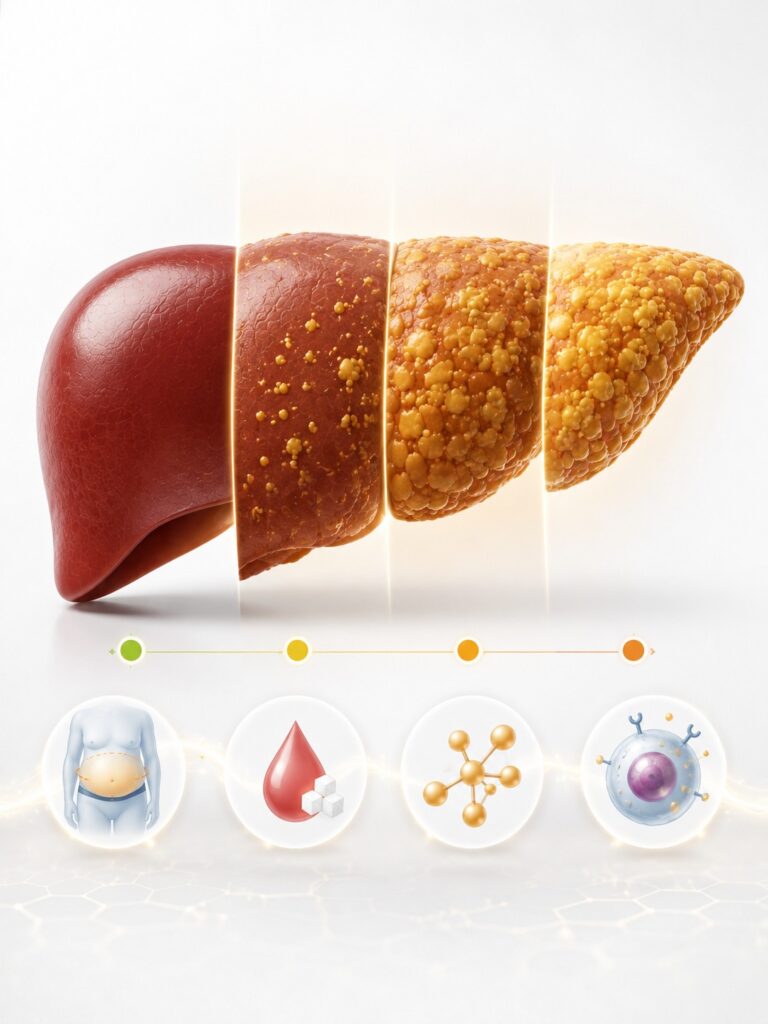
Fatty liver disease means extra fat has started collecting inside the liver cells.
A small amount of fat in the liver can be normal. But when fat becomes too much, it can affect how the liver works. In people with diabetes, obesity, high cholesterol, high BP, high triglycerides, or belly fat, fatty liver is usually linked with metabolic health problems.
Today, this condition is also known as MASLD, which means Metabolic Dysfunction-Associated Steatotic Liver Disease.
Many people think fatty liver happens only because of alcohol. But that is not true. Fatty liver can also happen in people who do not drink alcohol. Diabetes, insulin resistance, belly fat, obesity, and high triglycerides are major reasons behind fatty liver in many patients.
Why People With Diabetes Have a Higher Risk of Fatty Liver
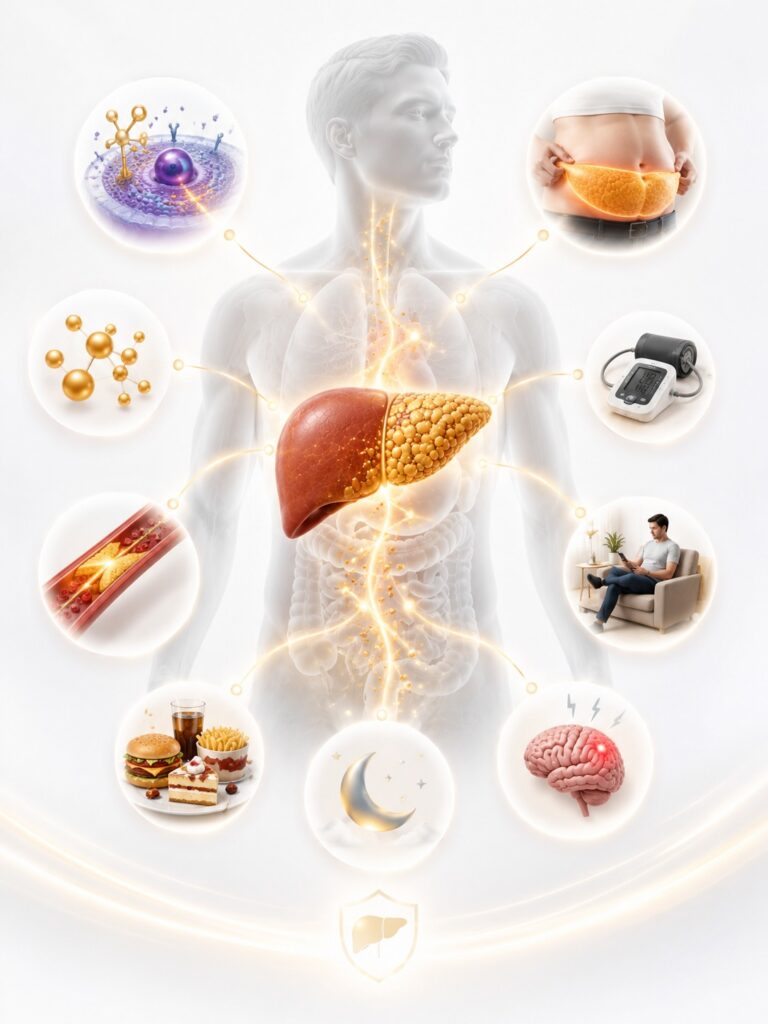
People with type 2 diabetes have a much higher risk of fatty liver because diabetes often comes with other metabolic problems.
Common risk factors include:
- Insulin resistance
- Belly fat
- High triglycerides
- Obesity or overweight
- High blood pressure
- High cholesterol
- Low physical activity
- High intake of refined carbs and sugary foods
- Poor sleep and high stress
For many Indian patients, belly fat is an important warning sign. A person may not look very overweight, but they may still have fat around the abdomen. This belly fat is strongly linked with insulin resistance, fatty liver, and diabetes risk.
So, the weighing scale is not the only thing that matters.
Waist size, sugar levels, triglycerides, liver enzymes, and liver ultrasound findings are also important.
Simple example:
A person may say, “My weight is not too high, so I cannot have fatty liver.” But if they have diabetes, belly fat, high triglycerides, and low physical activity, fatty liver can still develop.
How Fatty Liver Can Affect Diabetes Management
The liver plays a major role in blood sugar control. It stores sugar and releases it when your body needs energy. But when the liver becomes fatty, this balance can get disturbed.
A fatty liver may not respond properly to insulin. Because of this, the liver may continue releasing sugar into the blood even when the body already has enough sugar.
This can make diabetes harder to manage.
A fatty liver may contribute to:
- Higher fasting sugar
- Higher HbA1c
- More insulin resistance
- Difficulty losing weight
- High triglycerides
- Increased heart risk
- Poor overall metabolic health
Many patients say, “I am taking medicines, but my sugar is still not coming under control.”
In such cases, fatty liver can be one of the hidden reasons. This does not mean fatty liver is the only reason for uncontrolled diabetes. Diet, medicines, sleep, stress, physical activity, and other health conditions also matter. But liver health is an important part of proper diabetes management.
Quick takeaway:
If diabetes is not getting controlled despite medicines and lifestyle changes, it may be time to check liver health too.
Symptoms of Blood Sugar Imbalance and Fatty Liver
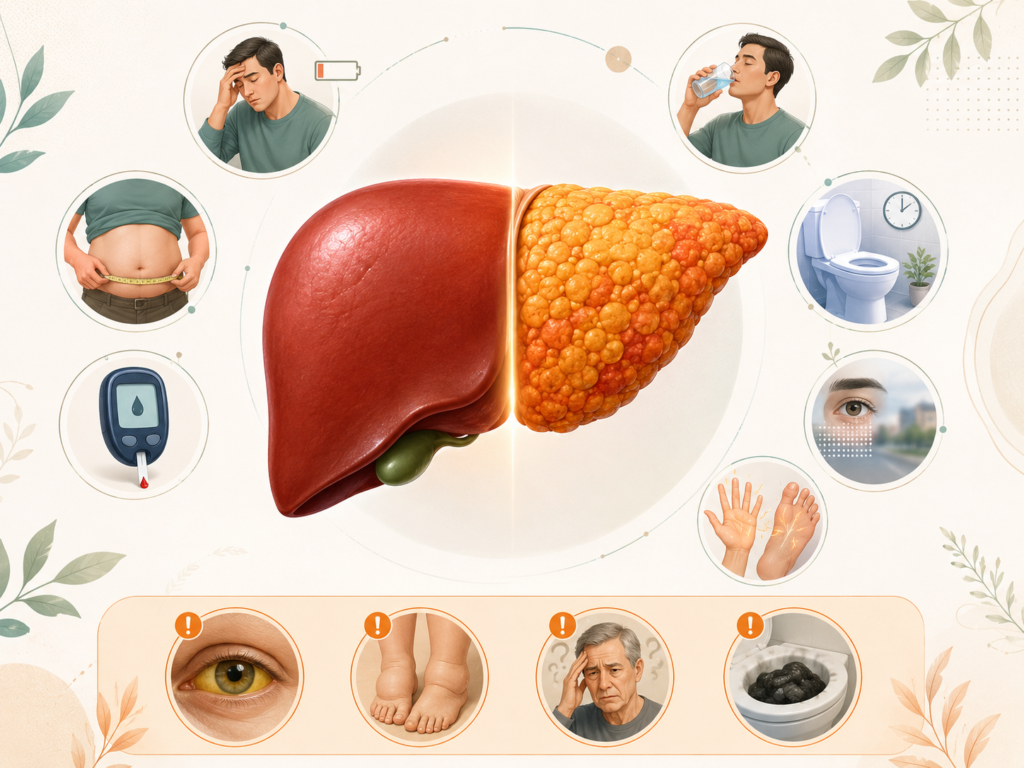
Fatty liver often has no symptoms in the early stage. That is why many people say, “But I feel completely fine.” Feeling fine does not always mean the liver is healthy.
Some possible signs of fatty liver or metabolic imbalance include:
- Constant tiredness
- Low energy
- Heaviness in the upper-right side of the abdomen
- Weight gain around the waist
- Difficulty losing weight
- High triglycerides
- High SGPT or SGOT
- Fatty liver seen on ultrasound
- Poor sugar control
Patients should also understand the symptoms of blood sugar imbalance, such as:
- Frequent urination
- Increased thirst
- Excess hunger
- Blurred vision
- Slow wound healing
- Unexplained tiredness
- Sudden weight changes
- Tingling or numbness in hands and feet
More serious liver-related symptoms may include:
- Yellow eyes or yellow skin
- Swelling in the legs
- Swelling in the abdomen
- Easy bruising or bleeding
- Vomiting blood
- Black stools
- Confusion
- Severe weakness
These serious symptoms need urgent medical attention.
But it is better not to wait for symptoms. If you have diabetes, obesity, belly fat, high triglycerides, or fatty liver in ultrasound, speak to a doctor early.
Common Reasons for Liver Damage in Diabetic Patients
There can be many reasons for liver damage, especially in people with diabetes or poor metabolic health.
Some common reasons include:
- Long-term uncontrolled diabetes
- Fatty liver disease
- Obesity or belly fat
- High triglycerides
- High cholesterol
- Alcohol intake
- Viral hepatitis
- Certain medicines without medical supervision
- Crash diets or unsafe supplements
- Poor lifestyle and lack of physical activity
In diabetic patients, fatty liver should not be ignored because it can slowly progress in some people. Early-stage fatty liver may only mean fat buildup. But in some cases, it can cause liver inflammation. Long-term inflammation can lead to liver scarring, known as fibrosis.
The progression can look like this:
Fatty liver → Liver inflammation → Fibrosis → Cirrhosis → Liver failure or liver cancer risk
Not every person with fatty liver will reach this stage. Many people can improve fatty liver with timely care, weight management, sugar control, and regular follow-up.
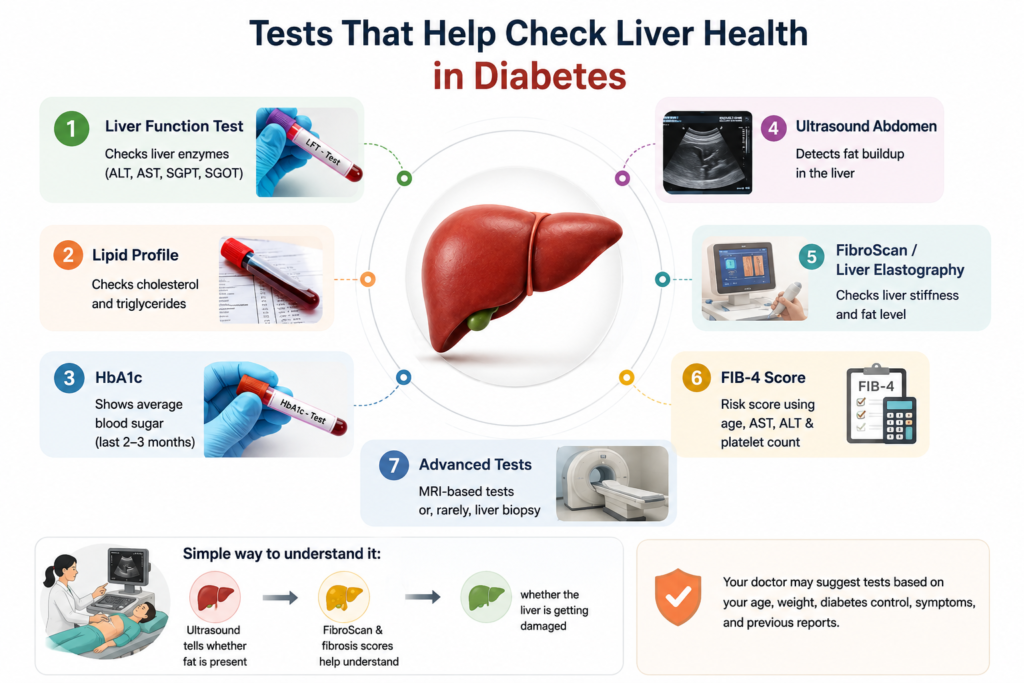
What Tests Can Help Check Liver Health in Diabetes?
Your doctor may suggest tests based on your age, weight, diabetes control, symptoms, and previous reports.
1. Liver Function Test
A liver function test checks liver enzymes like ALT, AST, SGPT, and SGOT. High levels may suggest liver stress or inflammation. But normal liver enzymes do not always rule out fatty liver or fibrosis.
2. Lipid Profile
This checks cholesterol and triglycerides. High triglycerides are commonly linked with fatty liver, diabetes, belly fat, and insulin resistance.
3. HbA1c
HbA1c shows your average blood sugar level over the last 2–3 months. Poor sugar control increases metabolic stress and may worsen fatty liver risk.
4. Ultrasound Abdomen
Ultrasound can detect fat buildup in the liver. Many people first come to know about fatty liver through a routine ultrasound.
5. FibroScan or Liver Elastography
FibroScan helps check liver stiffness and fat level. It can help doctors understand whether fatty liver has started causing fibrosis.
6. FIB-4 Score
FIB-4 is a simple risk score calculated using age, AST, ALT, and platelet count. It helps doctors estimate the risk of advanced liver fibrosis.
7. Advanced Tests
In some cases, doctors may suggest MRI-based tests or, rarely, liver biopsy.
The goal is not just to know whether fat is present. The more important question is: has fatty liver started causing liver damage?
Simple way to understand it:
Ultrasound tells whether fat is present. FibroScan and fibrosis scores help understand whether the liver is getting damaged.
Common Mistakes Diabetic Patients Make About Fatty Liver
Mistake 1: Thinking fatty liver is normal
Many patients say, “Everyone has fatty liver these days.” Yes, fatty liver is common. But common does not mean safe, especially if you have diabetes.
Mistake 2: Checking only sugar reports
HbA1c is important, but it is not the full picture. A diabetic patient should also monitor liver health, cholesterol, BP, kidney health, weight, and waist size.
Mistake 3: Believing only alcohol causes fatty liver
Fatty liver can happen even in people who do not drink alcohol. Diabetes, insulin resistance, obesity, belly fat, and high triglycerides are major causes.
Mistake 4: Taking random supplements
Not every “liver detox” product is safe. Your liver does not need marketing promises. It needs proper medical care, healthy food, regular movement, and monitoring.
Mistake 5: Following crash diets
Skipping meals or eating extremely low calories can disturb sugar levels and may not be safe for diabetic patients. A sustainable diet is better than a strict diet that cannot be followed for long.
Mistake 6: Ignoring belly fat
Belly fat is not just a cosmetic issue. It is a metabolic warning sign. Even if your weight is not very high, belly fat can increase fatty liver and diabetes risk.
Mistake 7: Not following up
One ultrasound report is not enough. Fatty liver needs monitoring, especially if you have diabetes or abnormal liver tests.
Fatty Liver, Diabetes Treatment, and Lifestyle Care
Fatty liver and diabetes should be managed together. A good diabetes treatment plan should not focus only on sugar numbers. It should also look at weight, waist size, cholesterol, triglycerides, liver health, BP, diet, physical activity, sleep, and stress.
Lifestyle changes can play a major role in improving metabolic health.
Helpful steps may include:
- Following a balanced diabetes-friendly diet
- Reducing refined carbohydrates and sugary foods
- Increasing protein and fiber intake
- Avoiding unnecessary fried and processed foods
- Doing regular walking, strength training, or doctor-approved exercise
- Managing weight gradually
- Sleeping well
- Avoiding alcohol or discussing safe limits with a doctor
- Taking medicines only as prescribed
- Going for regular follow-up tests
Do not start any medicine, supplement, or extreme diet without medical advice, especially if you have diabetes.
When Should a Diabetic Patient See a Liver Specialist?
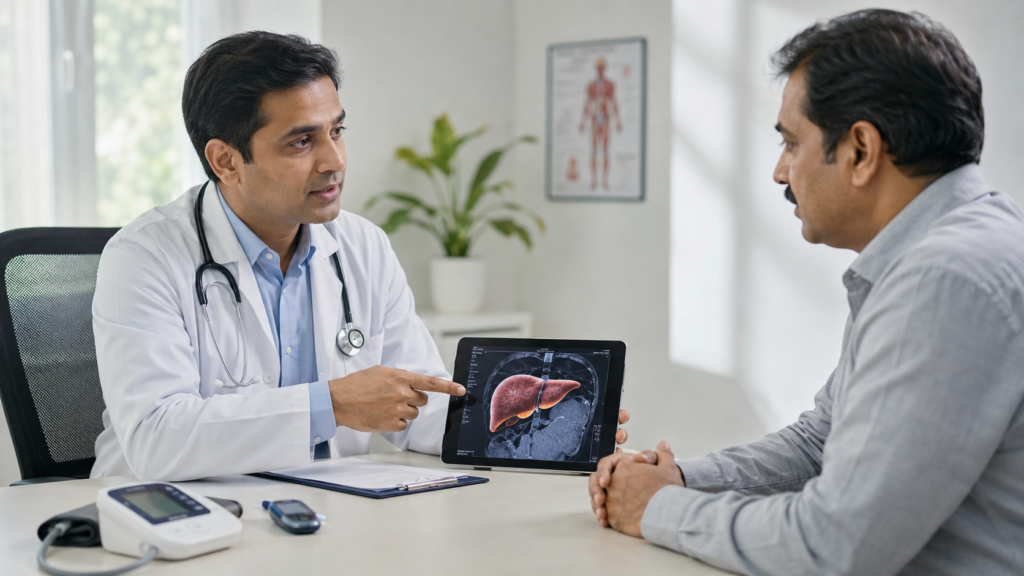
A diabetic patient should consider seeing a liver specialist, gastroenterologist, or doctor if:
- Fatty liver is seen on ultrasound
- Liver enzymes remain high
- FibroScan shows increased stiffness
- FIB-4 score is high
- Platelet count is low
- Diabetes is long-standing
- Sugar remains uncontrolled
- Triglycerides are high
- There is obesity or belly fat
- There is a family history of liver disease
- Lifestyle changes are not improving reports
You should seek urgent medical care if you notice:
- Jaundice
- Swelling in the abdomen
- Vomiting blood
- Black stools
- Confusion
- Severe weakness
Early guidance can help determine whether fatty liver is mild or has begun causing fibrosis.
How Rogtham Can Help With Fatty Liver and Diabetes Care
Managing fatty liver with diabetes needs a complete approach. It is not only about one medicine, one diet chart, or one test. It needs proper assessment, lifestyle correction, regular monitoring, and guidance that fits your daily routine.
At Rogtham, the focus is on structured care for lifestyle-related conditions such as fatty liver, diabetes, obesity, high BP, cholesterol problems, and metabolic health.
Rogtham can help with:
- Doctor-led consultation
- Review of blood reports and ultrasound
- Liver health assessment
- Diabetes and metabolic risk evaluation
- Diet planning based on your routine
- Exercise and movement guidance
- Weight management support
- Follow-up monitoring
- Practical lifestyle correction
- Long-term prevention-focused care
The goal is simple: to help patients understand their condition clearly and take the right steps before complications develop.
For diabetic patients, this is especially important because fatty liver and diabetes often need to be managed together.
If your ultrasound report shows diabetes, belly fat, high triglycerides, or fatty liver, consult Rogtham for a comprehensive liver and diabetes care assessment.
Conclusion: If You Have Diabetes, Check Your Liver Too
Diabetes is not just about sugar. It is a metabolic condition that can affect many organs, including the liver.
Fatty liver is very common in people with type 2 diabetes, and it often remains silent in the beginning. But if ignored, it may progress to inflammation, fibrosis, and serious liver disease in some patients.
The good news is that early fatty liver can often improve with the right lifestyle changes, weight management, sugar control, and medical guidance.
So, if you have diabetes, do not check only your sugar.
Check your liver too.
Your liver health is an important part of your diabetes care.
FAQs About Fatty Liver and Diabetes
1. Can diabetes cause fatty liver?
Diabetes does not cause fatty liver in every person, but type 2 diabetes and insulin resistance greatly increase the risk of fat buildup in the liver.
2. Can fatty liver make diabetes worse?
Yes. Fatty liver can worsen insulin resistance, which may make blood sugar harder to control.
3. Is fatty liver common in diabetic patients?
Yes. Fatty liver is very common in people with type 2 diabetes, especially when diabetes is linked with belly fat, obesity, high triglycerides, or poor lifestyle habits.
4. Can fatty liver be reversed?
Early fatty liver can often improve with weight loss, better diet, regular exercise, diabetes control, and proper medical monitoring. Advanced liver damage needs specialist care.
5. What is the best test for fatty liver?
Ultrasound can detect fatty liver, but FibroScan or liver elastography helps check liver stiffness and fibrosis risk. Blood tests and FIB-4 score may also help doctors assess liver health.
6. Should I worry if my liver enzymes are normal?
Normal liver enzymes are a good sign, but they do not always rule out fatty liver or fibrosis. If you have diabetes, obesity, belly fat, or fatty liver in ultrasound, ask your doctor whether further evaluation is needed.
7. Which doctor should I consult for fatty liver with diabetes?
You can start with a physician or diabetologist. If liver enzymes are high, FibroScan is abnormal, the FIB-4 score is high, or fatty liver is worsening, you may need to consult a gastroenterologist or liver specialist.
8. Is fatty liver related to diabetes management?
Yes. Fatty liver can affect insulin resistance, fasting sugar, triglycerides, and weight management. That is why liver health should be considered as part of diabetes management.
Medical Disclaimer:
This blog is for awareness and educational purposes only. It should not replace medical advice, diagnosis, or treatment. Please consult a qualified doctor for personalized guidance.