

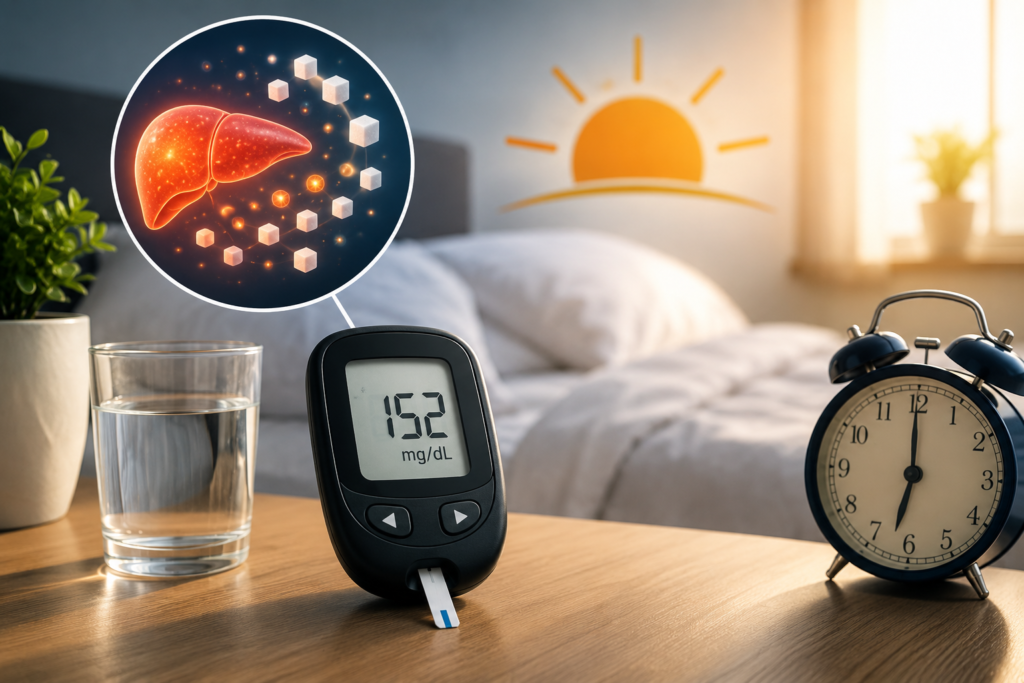
You ate dinner, went to sleep, and did not touch any food overnight. Then why are your blood sugar levels higher in the morning?
The answer is simple: food is not the only thing that affects blood sugar.
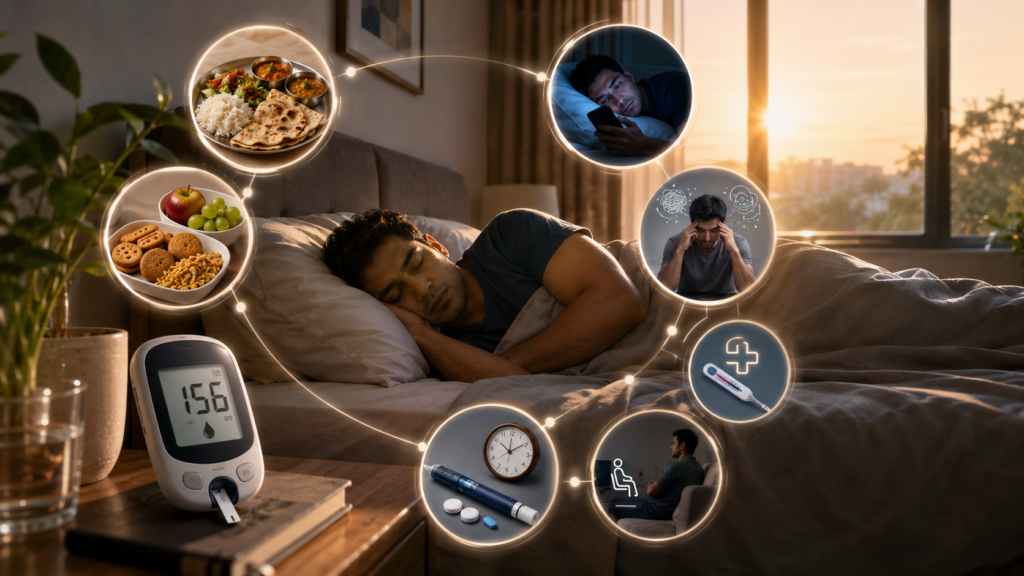
While you sleep, your liver releases glucose to keep your body functioning. Early-morning hormones may also make insulin temporarily less effective. This is called the dawn phenomenon. However, your dinner, sleep, stress, physical activity, illness, and medication timing may also influence your morning blood sugar levels.
One high blood sugar reading does not always mean something is wrong. But if it happens regularly, it is important to understand the pattern instead of skipping meals or changing your medicines yourself.
Why Do Morning Blood Sugar Levels Matter?
Morning blood sugar is often the first health number people see each day. When it is unexpectedly high, it can create anxiety and confusion.
This concern is especially relevant in India. The ICMR-INDIAB national study estimated that, in 2021, approximately 101 million people in India had diabetes and 136 million had prediabetes. Many people are therefore trying to understand their blood sugar levels and patterns before they become more difficult to manage.
| Metabolic condition | Estimated number in India |
| Diabetes | 101 million |
| Prediabetes | 136 million |
Source: ICMR-INDIAB estimates for 2021, published in 2023.
Why Can Blood Sugar Levels Rise While You Are Sleeping?
Your body does not completely switch off when you sleep. Your brain, heart, and other organs still need energy.
To meet this need, the liver releases stored glucose into the bloodstream. In someone without diabetes, the pancreas usually releases enough insulin to move this glucose into the cells and keep blood sugar levels within a suitable range.
But in people with diabetes, prediabetes or insulin resistance, the body may not produce enough insulin or may not use it effectively. As a result, some of the glucose released by the liver remains in the blood.
This is why you may have high morning blood sugar even if you have not eaten throughout the night. The American Diabetes Association identifies the dawn phenomenon and insulin wearing off overnight as two common reasons for high blood sugar in the morning.
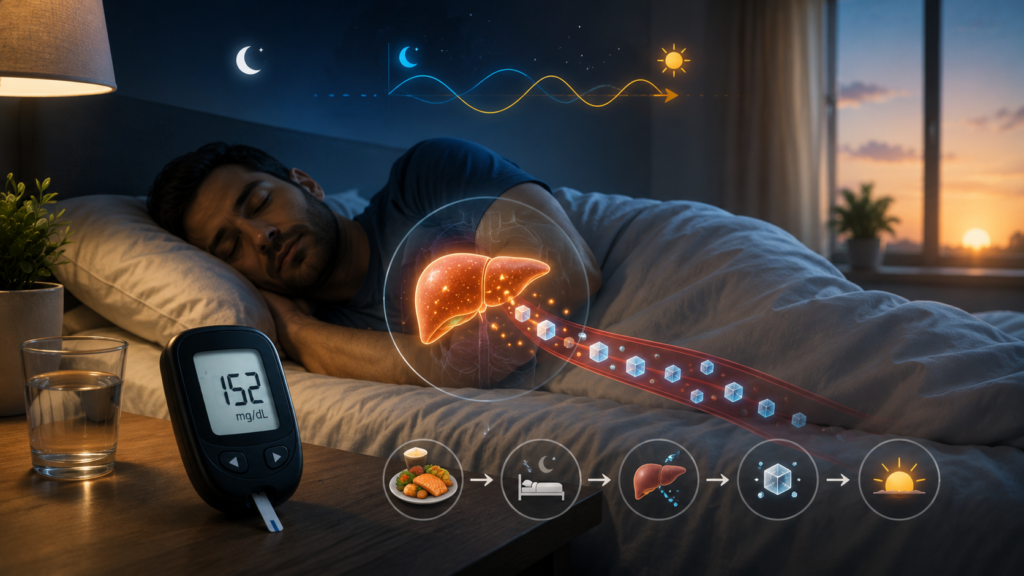
What May Be Happening Overnight?
Dinner → Bedtime blood sugar → Hormonal changes → Liver releases glucose → Morning blood sugar reading
Your morning result is therefore not just a reflection of dinner. It represents several hours of interaction between food, hormones, insulin, sleep, activity, and medication.
What Is the Dawn Phenomenon?
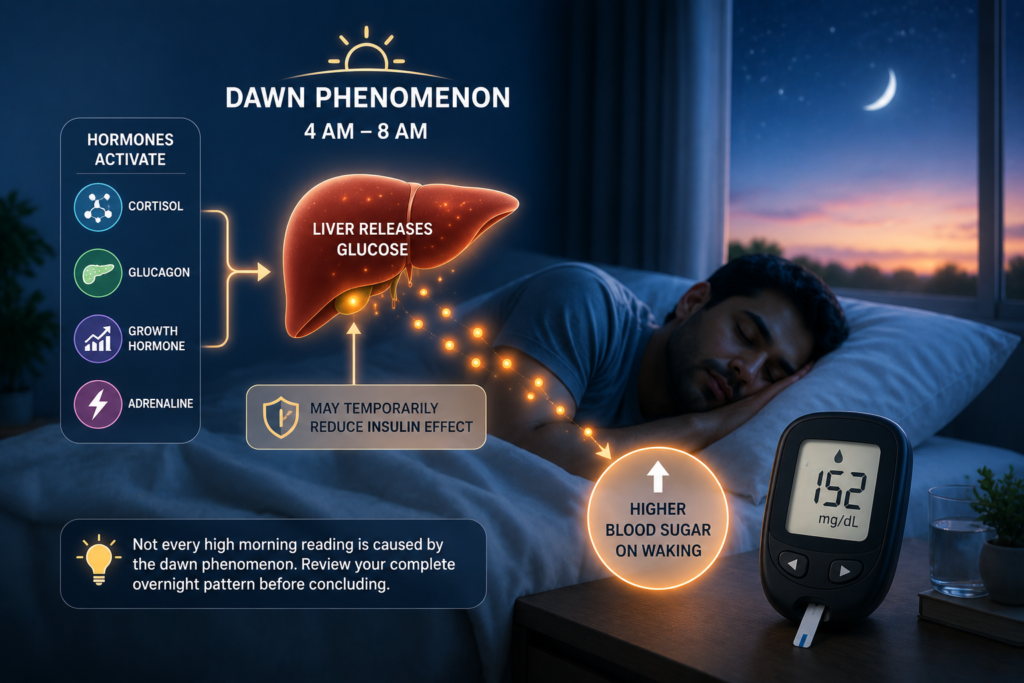
The dawn phenomenon is a natural rise in blood sugar during the early-morning hours, usually between approximately 4 a.m. and 8 a.m.
Before you wake up, hormones such as cortisol, glucagon, growth hormone, and adrenaline help prepare your body for the day. These hormones signal the liver to release glucose and may temporarily reduce the effect of insulin.
In many people, the body produces enough insulin to manage this additional glucose. But in someone with diabetes or insulin resistance, the body may not compensate effectively. This can result in higher blood sugar levels after waking.
Not every high morning blood sugar reading is caused by the dawn phenomenon. Looking at your complete overnight blood sugar pattern is important before concluding.
Common Beliefs About Morning Blood Sugar
Morning blood sugar is surrounded by several beliefs that can lead to unnecessary food restriction or unsafe treatment changes.
| Common belief | What you should know |
| “I did not eat, so my blood sugar cannot rise.” | Your liver can release stored glucose while you sleep. |
| “High blood sugar in the morning means dinner was unhealthy.” | Dinner may contribute, but hormones, stress, sleep and medicines can also affect blood sugar levels. |
| “Every morning blood sugar spike is the dawn phenomenon.” | Different overnight patterns can produce a similar morning reading. |
| “I should stop eating dinner.” | Skipping dinner may be unsafe, particularly when taking insulin or certain diabetes medicines. |
| “I should take extra medicine.” | Medicine or insulin should not be changed without medical advice. |
What Else Can Cause High Blood Sugar in the Morning?
A late or heavy dinner
A large dinner may keep your blood sugar levels elevated for several hours, especially when it contains substantial portions of refined carbohydrates.
This does not mean rice or roti must be completely removed. The amount you eat, the type of grain, the timing of dinner and what you eat alongside it all matter.
A balanced Indian dinner may include an appropriate portion of carbohydrates with vegetables, protein and fibre rather than only rice, roti or another carbohydrate-heavy food.
Bedtime snacking
Biscuits, namkeen, sweets, sweetened milk, leftovers or large portions of fruit eaten shortly before sleep may affect overnight blood sugar levels.
Even a food considered healthy can influence blood sugar when the portion is large or when it is added after an already complete dinner.
Poor or insufficient sleep
Poor sleep may make it harder for the body to use insulin effectively. The CDC notes that even one night of insufficient sleep can reduce how well the body uses insulin, while ongoing poor sleep may make diabetes and high blood sugar more difficult to manage.
Late-night screen use, shift work, snoring, frequent waking and possible sleep apnoea may therefore be relevant when morning blood sugar levels remain high.
Stress
Stress is not only emotional. It creates physical changes in the body.
Stress hormones can signal the liver to produce and release more glucose. Work pressure, anxiety, illness, pain or disturbed sleep may therefore contribute to higher blood sugar levels in some people.
Illness or infection
When your body is fighting an infection or illness, it releases stress hormones. This can cause high blood sugar even if you are eating less than usual.
A sudden change in blood sugar accompanied by fever, pain, vomiting, weakness or signs of infection should be discussed with a healthcare professional.
Reduced physical activity
A day spent sitting for long periods may affect how efficiently the muscles use glucose.
If your regular walking or exercise routine has reduced, you may notice changes in your morning or post-meal blood sugar levels. Activity should still be chosen according to your health, medicines, fitness level and risk of low blood sugar.
Medication or insulin timing
Morning blood sugar may rise if an evening medicine or insulin dose does not last through the night. Blood sugar levels may also remain elevated if they were already high before bed.
However, the morning blood sugar reading alone cannot tell you what treatment change is required.
Important: Never increase, reduce or change the timing of insulin or diabetes medication without consulting your treating doctor.
Dawn Phenomenon, Late Dinner or Overnight Low Blood Sugar?
The same high morning blood sugar reading can have different causes.
| Overnight blood sugar pattern | What it may suggest |
| High at bedtime and high in the morning | Dinner, bedtime snacking or overall blood sugar management may be contributing. |
| In range at bedtime but rising before waking | The dawn phenomenon or medication wearing off may be considered. |
| Low during the night followed by high morning blood sugar | A possible rebound pattern may require medical assessment. |
| High blood sugar throughout the day and night | Overall diabetes management may need review. |
The Somogyi effect is the idea that an overnight low may be followed by a rebound morning high. The American Diabetes Association describes this as a much rarer reason for high morning blood sugar than the dawn phenomenon or insufficient overnight insulin.
Do not assume which pattern you have based on one morning blood sugar reading.
How Can You Understand Your Overnight Blood Sugar Pattern?
Instead of making several changes at once, record what happens for a few days.
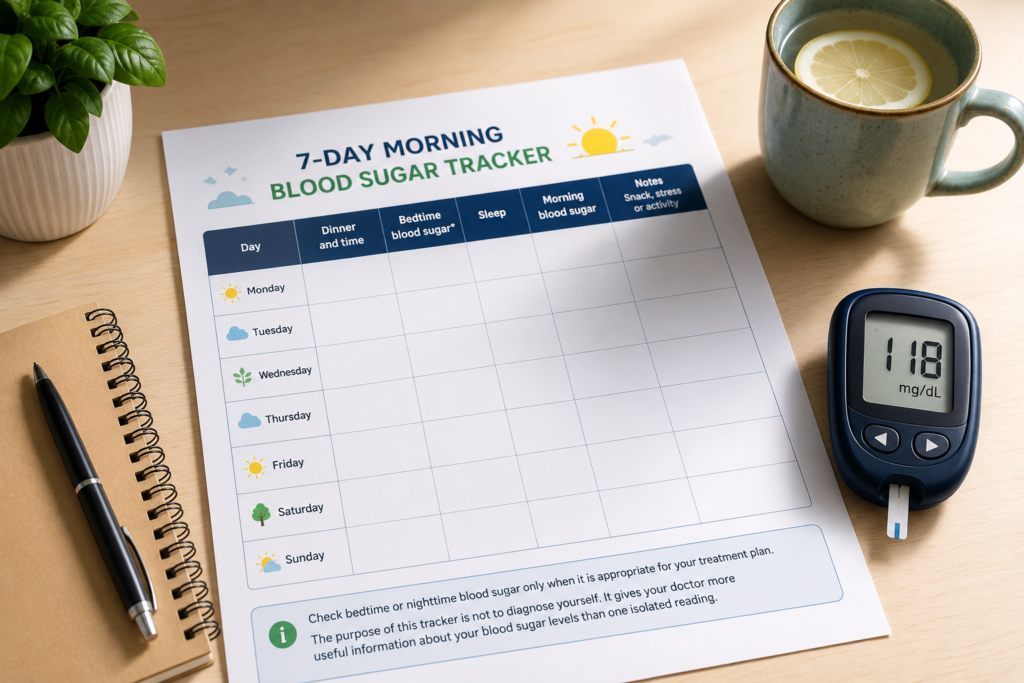
A useful record may include your dinner time, what you ate, bedtime snacks, physical activity, sleep quality, medication timing and waking blood sugar. Bedtime or nighttime readings should only be added when recommended by your healthcare professional.
A continuous glucose monitor, when clinically appropriate and available, can provide additional information about how blood sugar levels change during sleep.
Seven-Day Morning Blood Sugar Tracker
| Day | Dinner and time | Bedtime blood sugar* | Sleep | Morning blood sugar | Notes |
| Monday | Snack, stress or activity | ||||
| Tuesday | |||||
| Wednesday | |||||
| Thursday | |||||
| Friday | |||||
| Saturday | |||||
| Sunday |
Check bedtime or nighttime blood sugar only when it is appropriate for your treatment plan.
The purpose of this tracker is not to diagnose yourself. It gives your doctor more useful information about your blood sugar levels than one isolated reading.
Does High Morning Blood Sugar Mean Diabetes?
Not necessarily.
One high blood sugar reading from a home glucometer cannot diagnose diabetes. Diagnosis requires recognised laboratory testing interpreted by a healthcare professional. The NIDDK specifically notes that glucose-meter results are not suitable for diagnosing diabetes.
Laboratory Fasting Blood Sugar Levels
| Fasting plasma glucose | General interpretation |
| 99 mg/dL or below | Normal blood sugar range |
| 100–125 mg/dL | Prediabetes range |
| 126 mg/dL or above | Diabetes range; confirmation is generally required |
A fasting plasma glucose test is performed after fasting for at least eight hours. HbA1c or an oral glucose tolerance test may also be used. Pregnancy has different diagnostic criteria.
What Can Help Reduce High Morning Blood Sugar?
The right solution depends on the cause. There is no single food, drink or home remedy that works for everyone with high blood sugar.
Review your dinner pattern
Look at your complete dinner rather than blaming one ingredient. Consider the timing, overall portion, carbohydrate quantity, protein, vegetables, fibre and any food eaten after dinner.
A balanced meal that fits your routine is generally more practical than an extremely restrictive diet and may help support healthier blood sugar levels.
Avoid unnecessary bedtime eating
If you are eating out of habit rather than hunger, reducing late-night biscuits, sweets, namkeen or other snacks may help manage morning blood sugar.
However, people at risk of overnight low blood sugar may require an individualised snack or meal plan.
Consider a gentle walk after dinner
A comfortable walk after dinner may help the muscles use some circulating glucose. It should not feel exhausting or cause pain, dizziness or weakness.
People taking insulin or medicines that can cause low blood sugar should discuss suitable exercise timing with their doctor.
Improve your sleep routine
Try to maintain a regular sleep and waking time. Reduce late-night screen exposure and discuss persistent snoring, breathing pauses, or frequent waking with a healthcare professional.
Sleep is an important part of metabolic health and blood sugar management, not simply a period of rest.
Take medicines as prescribed
Take your medicine at the dose and time recommended by your doctor. If the same high morning blood sugar pattern continues, share your glucose record with the treating team.
Do not use someone else’s prescription or adjust your dose based on advice from social media.
When Should You Speak to a Doctor About High Blood Sugar?
Consult a healthcare professional when morning blood sugar remains above your recommended target on several days or changes significantly from your usual pattern.
Medical advice is particularly important if you:
- Use insulin or medicines that may cause low blood sugar
- Are pregnant
- Experience sweating, shaking or confusion during the night
- Have frequent thirst, urination, blurred vision or unexplained weight loss
- Have kidney, liver or heart disease
- Notice very high or very low blood sugar levels with symptoms
Seek urgent medical help for fainting, seizures, severe confusion, breathing difficulty, persistent vomiting or severe weakness.

Frequently Asked Questions
Why is my fasting blood sugar high but post-meal blood sugar normal?
Overnight liver glucose release, hormones or medication timing may affect fasting blood sugar differently from post-meal levels.
Can poor sleep raise morning blood sugar levels?
Yes. Poor sleep may temporarily reduce insulin sensitivity and make blood sugar harder to manage.
Can fruit at night increase fasting blood sugar?
It may, depending on the type, quantity, timing, and the rest of your meal.
Are morning blood sugar levels always higher?
No. Blood sugar patterns differ from person to person and may be higher at other times.
Can prediabetes cause morning blood sugar spikes?
People with prediabetes may have elevated fasting blood sugar, but repeated readings should be properly assessed.
Can walking after dinner help lower blood sugar?
A gentle post-dinner walk may help some people manage their blood sugar response.
Should I skip dinner if my morning blood sugar is high?
No. Skipping dinner is not a safe solution for everyone, especially when taking diabetes medication.
The Takeaway
High morning blood sugar does not always mean you ate the wrong food.
Your liver, early-morning hormones, sleep, stress, activity, dinner habits, and medicines may all influence your blood sugar levels. Instead of reacting to one high blood sugar reading, observe the pattern and discuss repeated high readings with a healthcare professional.
Rogtham’s approach combines medical care with practical guidance on food, movement, sleep, stress and daily habits. The aim is to understand the individual behind the blood sugar report—not simply treat one isolated number.
Concerned about repeated high fasting blood sugar? Rogtham’s medical and lifestyle team can help you understand your reports, routines and blood sugar patterns and guide you toward safe, sustainable next steps.
Medical Disclaimer: This article is for general educational purposes only and is not a substitute for medical diagnosis or personalised treatment. Do not change your insulin, diabetes medicines, meals or exercise routine without consulting a qualified healthcare professional.