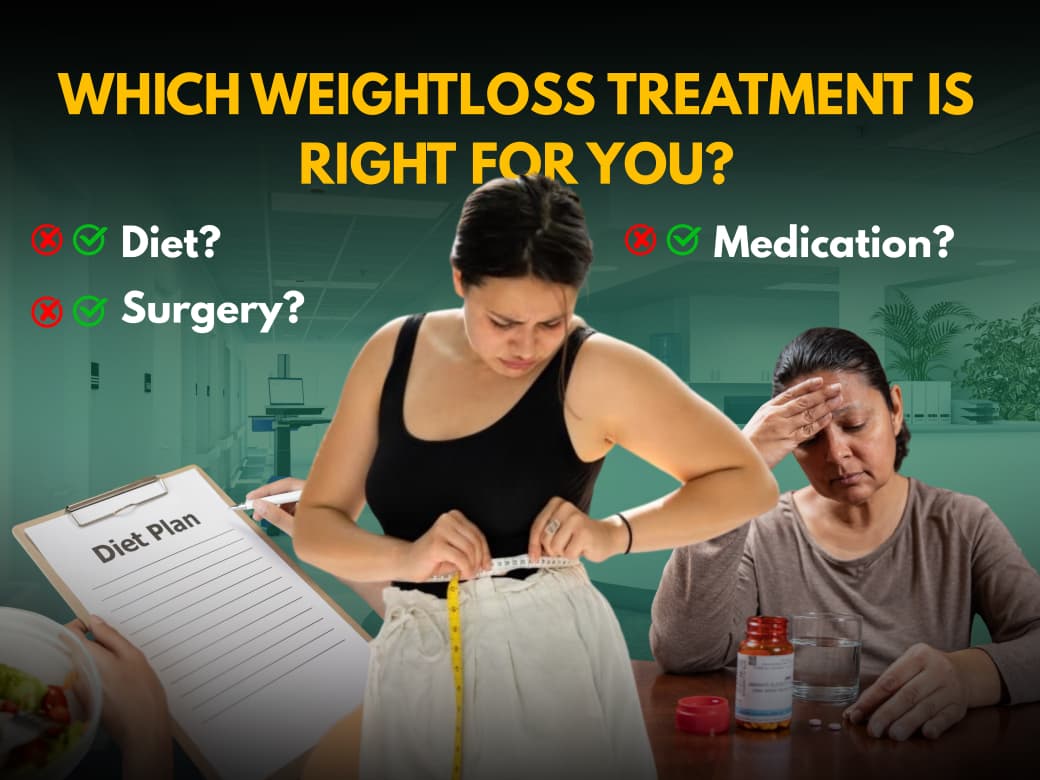

Choosing the right weight loss treatment is not about copying someone else’s diet, injection or surgery journey. It begins with understanding why you are gaining weight, how it is affecting your health, and which approach can realistically work for your body and lifestyle.
The Biggest Mistake Often Happens Before the Diet Begins
Most people think weight loss fails because of too many carbohydrates, missed workouts, or occasional treats. But the bigger mistake often happens earlier—when a treatment is chosen before the real problem is understood.
A friend recommends a strict diet for weight loss. A colleague talks about weight loss injections. Someone else suggests bariatric surgery. It is natural to wonder which option you should try.
But a plan that worked for someone else may not be right for you. Your waist size, blood sugar, sleep, health conditions, weight history, and previous attempts all matter.
Before choosing between lifestyle changes, medication, or surgery, ask:
What does my body actually need?
The Scale Does Not Tell the Whole Story
Two people can have the same age, height, and weight, but very different health risks.
One may have normal blood sugar and no major symptoms. Another person with the same weight may have prediabetes, a larger waist, loud snoring, knee pain, or fatty liver.
On the scale, they may look similar. Medically, they are not. Their treatment needs may therefore be very different.
This is why obesity care should not ask only, “How much do you weigh?” It should also ask, “What is this weight doing to your health?”
This is especially important in India, where abdominal fat and metabolic problems may appear even when BMI is not extremely high.
Understand Why the Weight Is Not Shifting
For some people, weight gain is linked to a sedentary routine, irregular meals, frequent snacking, poor sleep or larger portions.
For others, the picture is more complex. PCOD, insulin resistance, thyroid problems, poor-quality sleep, sleep apnoea, and certain medicines can all make weight management more difficult.
Repeated crash dieting is another common issue. Many people lose weight quickly, feel constantly hungry and regain it later.
That history matters. It does not mean food and physical activity are unimportant. It means the next plan should address the real difficulty instead of assuming the person lacks discipline.
A doctor may ask when the weight gain began, which plans you have tried, how much weight you lost and why the plan stopped working.
People often search for the best way to loose weight, but there is no single answer for everyone. The safest approach depends on your health, habits, medical history and ability to continue the plan.
Sometimes the body is not “refusing” to lose weight. The earlier approach may simply have been too strict, generic or difficult to maintain.
When Should You Speak to a Specialist?
You do not need to wait until your weight becomes extremely high.
A medical assessment may be useful if weight keeps returning after serious efforts, your waist continues to increase, or your blood sugar, cholesterol or liver reports begin to change.
Heavy snoring, waking up exhausted, irregular periods, PCOD symptoms, joint pain, breathlessness and reduced mobility also deserve attention. The same is true when weight begins to affect confidence or emotional well-being.
These signs do not automatically mean you need medication or surgery. They suggest that another random diet chart may not be the best next step.
What Should a Proper Obesity Assessment Include?
A useful consultation should not end after checking your weight and advising you to “eat less and walk more.”
Your doctor may review your BMI, waist circumference, blood pressure, symptoms and blood reports. They may also ask about medicines, hormonal symptoms, stress, sleep, hunger, emotional eating, work routine and physical limitations.
A night-shift worker or a person with severe knee pain may need a very different plan from someone with a regular routine and no movement limitations.
At Rogtham, treatment should begin with the person, not with a pre-decided diet, injection or procedure.
Which Tests May Be Needed?
There is no single obesity test package that everyone needs.
Depending on your symptoms and medical history, a doctor may recommend fasting glucose and HbA1c, a lipid profile, liver-function tests, thyroid tests or kidney-function tests. Hormonal assessment may be useful for PCOD, while people with loud snoring or daytime tiredness may need sleep evaluation.
Not everyone needs every test. A test is useful only when it helps the doctor understand your health or choose treatment safely.
Which Treatment May Be Right for You?
Obesity treatment may include structured lifestyle care, prescription medication, bariatric or metabolic surgery, or a combination of these approaches.
These are not competing options. They are different levels of care for different medical situations.
Structured Lifestyle Treatment
Lifestyle treatment is often the starting point, but it should not mean receiving a photocopied chart and being told to walk for an hour every day.
For many people, the best weight loss program is one that matches their hunger patterns, sleep, work schedule, food preferences, health conditions and movement capacity.
A meaningful programme may include better meal composition, enough protein and fibre, realistic portions, daily movement, strength training, improved sleep and support for emotional eating.
The plan should work during office days, travel and family meals—not only during an ideal week. Lifestyle care also remains essential when medicine or surgery is used.
A realistic first goal is often a moderate percentage of starting weight, not a dramatic transformation within a few weeks. Progress should also be measured through waist size, blood sugar, blood pressure, energy, sleep and mobility.
What About Medicines and Weight-Loss Injections?
Weightloss injections are often presented online as a quick solution or beauty treatment. They are neither. They are prescription medical treatments.
Some medicines can reduce appetite or increase fullness. They may help selected patients, especially when difficult hunger, metabolic conditions or repeated treatment failure are part of the problem.
Before prescribing them, a doctor should review your medical history, current medicines, digestive health, pregnancy plans and possible side effects.
Cost and long-term affordability matter too. Starting treatment without discussing how long it may continue—or what may happen after stopping it—leaves an important question unanswered.
Some people regain weight after medication is withdrawn because the biological drivers of hunger and weight may still be present. This is why weightloss injections should be part of a long-term medical plan, not a temporary shortcut.
The important question is not, “Which injection gives the fastest result?” It is, “Would medication be safe and useful for me, and what is the long-term plan?”
When Does Bariatric Surgery Become an Option?
Bariatric or metabolic surgery is a recognised treatment for selected people with more severe obesity or important obesity-related diseases.
It may be discussed when weight is significantly affecting health, when diabetes or sleep apnoea is present, or when properly supervised non-surgical treatment has not produced enough improvement.
BMI is important, but it is not the only factor. A specialist team may also consider fatty liver, high blood pressure, mobility problems, nutritional health, eating behaviour and readiness for long-term follow-up.
A surgical consultation does not mean you have agreed to surgery. It gives you the opportunity to understand the possible benefits, risks and alternatives.
The Right Plan May Combine Treatments
Real patients do not always fit neatly into lifestyle, medication or surgery categories.
A woman with PCOD may need nutrition support and metabolic care. Someone with knee pain may need weight management alongside physiotherapy. A person with sleep apnoea may find appetite and energy easier to manage once sleep improves.
Someone using medication still needs help with food quality, strength training and maintenance. Patients who undergo surgery also require nutritional and medical follow-up.
The right weightloss treatment is often a carefully planned combination based on what the person actually needs.
Where Rogtham Fits Into the Decision
The value of obesity care is not simply having access to diets, medicines or surgery. It is knowing which treatment is appropriate—and which treatment you may not need.
At Rogtham, the process begins by reviewing your weight history, waist measurement, symptoms, blood reports, medical conditions and previous attempts. Hunger, sleep, work routine, stress, emotional eating and movement limitations are also considered.
After this assessment, treatment may remain lifestyle-focused. Medication may be discussed when medically suitable. In selected cases, a surgical opinion may be recommended.
Treatment should follow the assessment, not come before it.
Questions to Ask Before Starting Treatment
Before choosing a plan, ask why it is being recommended, what results are realistic, which side effects are possible, how progress will be measured and what happens after the first few months.
A responsible best weight loss program should include monitoring, adjustment and long-term support.
Be cautious of programmes that promise dramatic results within a fixed number of days, give everyone the same diet or offer medicines without a proper medical review.
Good obesity care should make you feel informed, not pressured or ashamed.
Frequently Asked Questions
Can I Lose Weight Without Injections or Surgery?
Yes. Many people can make meaningful progress through personalised nutrition, movement, better sleep, and regular follow-up. Whether lifestyle care is enough depends on your health and previous treatment history.
Are Weight-Loss Injections Safe?
They can be safe and effective for selected patients when prescribed and monitored by a qualified doctor. They are not suitable for everyone.
Do I Need to Try Every Diet Before Consulting a Doctor?
No. If weight keeps returning or begins affecting your reports, sleep, periods, joints, mobility or emotional health, it is reasonable to seek an assessment.
Stop Asking What Worked for Someone Else
The fastest-looking treatment is not automatically the best. The newest injection is not automatically the right medicine. Surgery is neither a failure nor an easy shortcut.
The right plan is the one that addresses what is driving your weight, matches your health risks, and can be continued safely in real life.
At Rogtham, obesity care begins by understanding your symptoms, medical history, blood reports, and previous attempts. Only then should lifestyle treatment, medication, surgery or a combined approach be discussed.
Book a personalised obesity assessment with Rogtham and get treatment guidance based on your health—not someone else’s weight-loss journey.
This article is intended for general educational purposes and does not replace personalised medical advice. Prescription medicines and bariatric surgery should only be considered after consultation with an appropriately qualified healthcare professional.