“Written by Rogtham Editorial Team | Medically Reviewed by Dr. Ashish Sethi (Gastroenterologist)”.
Introduction: The Uninvited Guest in the Indian Household
Let’s be honest for a second. If someone mentions “liver disease,” what’s the first thing that pops into your head? Most people immediately think of someone who drinks heavily.
But here’s the reality check: fatty liver is fast becoming one of the most common health issues in India, and it’s happening to people who have never touched a drop of alcohol in their lives.
The reason isn’t a mystery; our daily lives have drastically changed. Between endless desk jobs, binge-watching sessions, quick swiping for fast food, sugary cold coffees, and the non-stop stress of modern life, our livers are paying the price.
The sneakiest part? Fatty liver usually doesn’t hurt or cause any obvious symptoms at first. Most people only find out they have it by pure accident—during a routine office health check-up, an ultrasound for something else, or a regular blood test.
According to the Union Health Ministry, Non-Alcoholic Fatty Liver Disease (NAFLD) is rapidly turning into a major public health crisis in India. It is closely linked to obesity, diabetes, and heart health. Data shows that anywhere from 9% to 32% of the Indian population might be living with a fatty liver. That means roughly 1 to 3 out of every 10 people you know could be dealing with this right now.
This is exactly why doctors call it a silent epidemic.

Why Most of Us Just Brush It Off
The biggest hurdle with fatty liver isn’t just the condition itself—it’s our casual attitude toward it.
For most people, a fatty liver is just a single, boring line hidden at the bottom of an ultrasound report. They read “Fatty liver Grade 1 “ or “Mild Fatty Liver” and think, “Oh, it’s fine. Everyone has it.”
Do any of these thoughts sound familiar?
- “It’s only Grade 1, nothing to worry about.”
- “I don’t drink alcohol, so my liver must be perfectly fine.”
- “Nothing hurts, so why should I stress?”
- “Come on, everyone has a fatty liver these days!”
- “I’ll start eating healthy and fix it later.”
Here’s the straight truth: this casual attitude is highly risky.
A fatty liver might not cause sharp pain today, but it is your body’s check-engine light. It’s warning you that your metabolism, weight, blood sugar, cholesterol, or daily habits need urgent attention. Just because a health issue is common doesn’t mean it’s normal or safe to ignore.
“What is Fatty Liver Disease ?”
In simple terms, fatty liver means excess fat has started packing itself inside your liver cells.
Now, a tiny bit of fat in the liver is perfectly normal. But when that fat starts building up like unwanted clutter in a storage room, it stops the liver from doing its job efficiently.
Think of your liver as the ultimate multi-tasker. It handles digestion, manages your metabolism, stores energy, flushes out toxins, and runs hundreds of other biological processes every single second. When it gets choked with fat, it has to work twice as hard just to keep you going.
While the early stages might not disrupt your day-to-day life, ignoring it for years can lead to inflammation, permanent scarring, and serious long-term damage.
Medically, it is divided into two main categories:
1. Alcohol-Related Fatty Liver
This happens when regular or heavy alcohol consumption damages liver cells, causing fat to pile up rapidly. If the drinking doesn’t stop, it can easily progress to inflammation, severe scarring (fibrosis), cirrhosis, or even liver failure.
2. What is MASLD? The New Name for Non-Alcoholic Fatty Liver
This happens to people who drink very little or no alcohol at all. Instead, it is heavily driven by:
- Excess belly fat and obesity
- Type 2 diabetes or prediabetes
- Insulin resistance
- High cholesterol and triglycerides
- A diet heavy on processed foods and a lack of movement
Medical Update: Doctors are now shifting to a more accurate medical term for this: MASLD (Metabolic Dysfunction-Associated Steatotic Liver Disease). But to keep things simple for the rest of us, we still call it fatty liver.
Myth vs. Fact: Let’s Clear the Confusion
| Myth | Fact |
| Only alcohol causes fatty liver. | Obesity, diabetes, high cholesterol, and poor lifestyle choices are massive causes for non-drinkers, too. |
| Fatty liver always makes you feel sick. | Most people feel completely normal in the early stages and have zero symptoms. |
| Thin people don’t get fatty liver. | Even lean people can get it if they have poor metabolic health or insulin resistance (often called “skinny fat”). |
| Fatty liver Grade 1 is totally harmless. | Grade 1 is your early warning shot. It’s the absolute best time to take action and reverse it. |
| You just need a magic pill to cure it. | No single medicine can fix it. True recovery requires changes in diet, exercise, and weight management. |
| Fatty liver isn’t dangerous. | If ignored, it can quietly progress to liver inflammation, cirrhosis, or liver failure over time |
Why Is It Called a “Silent Epidemic”?
It’s silent because it doesn’t make a grand entrance. There is usually no intense pain, no fever, no sudden swelling, and no obvious red flags. A person can look completely glowing, fit, and healthy on the outside while their liver is quietly struggling on the inside.
Most people only stumble upon it during:
- Annual office health check-ups
- Routine blood work or Liver Function Tests (LFT)
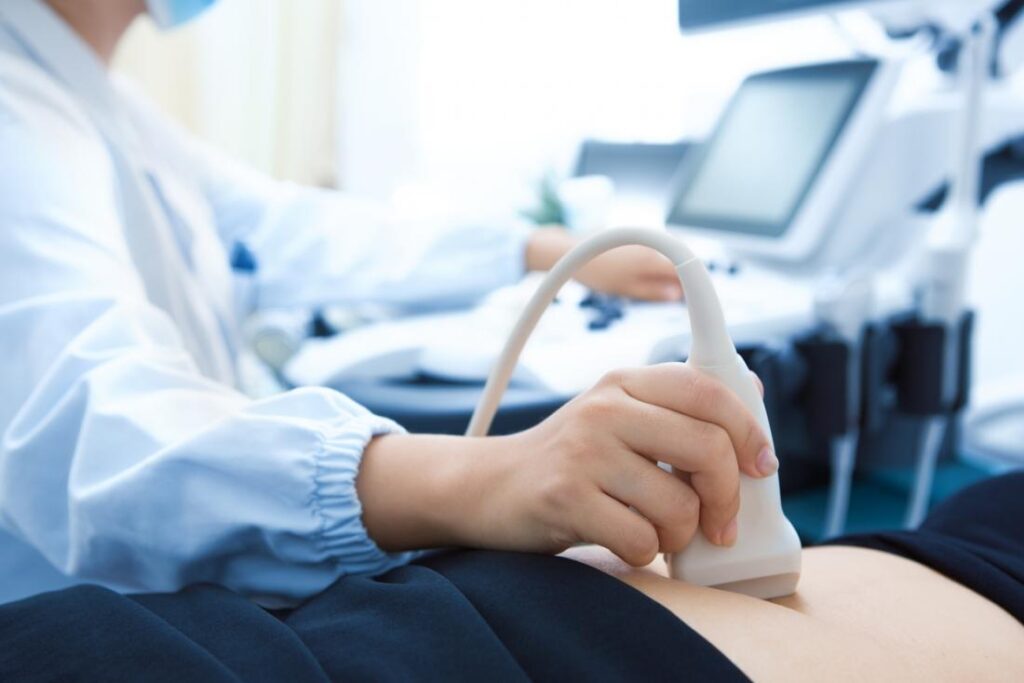
- An abdominal ultrasound for gas or bloating
- Routine diabetes or cholesterol screenings
It’s an epidemic because the numbers are skyrocketing across India, moving hand-in-hand with our rising rates of diabetes, expanding waistlines, and high blood pressure.
Fatty Liver in India: What the Numbers Say
This isn’t a rare condition anymore; it’s a mainstream Indian health crisis.
- The Union Health Ministry highlights that NAFLD is a fast-growing cause of liver disease across the country, affecting between 9% to 32% of our population, depending on where you live and your lifestyle.
- A massive data analysis published on ScienceDirect estimated that the overall prevalence among Indian adults could be as high as 38.6%.
What’s truly alarming is the age shift. This isn’t just an “old person’s disease” anymore. Doctors are seeing a massive surge in patients in their 20s and 30s. Desk-bound IT jobs, midnight food deliveries, sugary energy drinks, erratic sleep schedules, and high stress are making young corporate India incredibly vulnerable.
Quick Facts at a Glance:
- It often gives no early warnings.
- It affects both drinkers and non-drinkers alike.
- It loves to team up with diabetes, belly fat, and high cholesterol.
- It is hitting the younger generation harder than ever before.
The Reality Check: Changing the Way We Think
| What People Think | What the Reality Can Be |
| “I don’t drink, so I’m safe.” | Your daily diet and lack of movement can stress your liver just as much as alcohol. |
| “It’s just Grade 1, I’ll deal with it later.” | Delaying gives the fat time to cause permanent inflammation and scarring. |
| “If I feel fine, I am fine.” | The liver is a resilient organ; it won’t complain until the damage is quite advanced. |
| “A doctor will give me a syrup to wash out the fat.” | True liver health is built in the kitchen and through daily physical movement, not a bottle. |
The Real Problem: The “I’ll Fix It Tomorrow” Loop
The biggest threat with fatty liver isn’t the fat itself; we tend to procrastinate. Because a fatty liver doesn’t stop you from going to work, eating your favorite meals, or living your life, it’s easy to push it to the back burner.
We keep sitting for 10 hours a day, ordering fried snacks, drinking sweet, cutting chai, staying up late, and ignoring our growing waistlines.
But remember: fatty liver is your body’s way of asking for help. It’s telling you that your metabolism is under severe pressure and your lifestyle needs a reset.
Why Is It Spreading So Fast Among Indians?
Fatty liver doesn’t happen overnight. It is the slow result of small, everyday habits piling up over months and years.
Our modern Indian lifestyle has evolved rapidly:
- The Sedentary Shift: Work has become completely desk-based. We move from a desk chair to a car seat to a living room couch.
- The Carb Overload: Our diets have become heavily reliant on refined carbs (maida, white breads, biscuits, and heavily processed snacks).
- The Liquid Sugar Trap: Drinking multiple cups of highly sweetened tea/coffee daily, soft drinks, or packaged juices.
- Late Dinners & Poor Sleep: Eating heavy meals right before bedtime disrupts how the liver processes fat overnight.
Even seemingly harmless habits—like having a couple of biscuits with your tea twice a day or skipping a walk because you’re tired—slowly add to the liver’s fat burden over time.
Daily Habits: How They Secretly Stress Your Liver
| Daily Habit | How It Affects Your Liver |
| Sitting for long hours | Shuts down calorie burning and signals your body to store excess energy as fat. |
| Sweet tea, sodas, & packaged juices | Overloads the liver with fructose, which the liver directly converts into fat. |
| Fried snacks & fast foods | Pumps your system with unhealthy trans-fats and excessive calories. |
| Maida, white bread, and bakery treats | Spikes your blood sugar rapidly, worsening insulin resistance. |
| Late-night eating | Completely derails your natural nighttime metabolism and digestion. |
| Chronic poor sleep | Upsets your hormonal balance, making weight loss and metabolic recovery much harder. |
| Zero regular exercise | Allows visceral fat (fat around your inner organs) to build up unchecked. |
Who Needs to Be on High Alert?
While anyone can develop a fatty liver, you should be extra vigilant if you have:
- Notable belly fat (even if your arms and legs look thin)
- Type 2 diabetes or prediabetes
- High cholesterol or triglyceride levels
- High blood pressure
- PCOS (Polycystic Ovary Syndrome)
- A highly sedentary routine or desk job
- A family history of diabetes or liver issues
Simply put: if a health condition affects your metabolism, blood sugar, or weight, it is directly affecting your liver too.
Quick Self-Check: Are You at Risk?
Take a quick look at these everyday markers:
- [ ] Do you have visible belly fat?
- [ ] Do you sit for more than 6–7 hours a day?
- [ ] Do you have diabetes, prediabetes, or a family history of it?
- [ ] Are your cholesterol or triglyceride levels on the higher side?
- [ ] Do you find yourself eating fried food, sweets, or packaged snacks multiple times a week?
- [ ] Do you regularly consume sugary tea, coffee, sodas, or packaged juices?
- [ ] Has a blood test ever shown high SGPT or SGOT levels?
- [ ] Has an ultrasound ever mentioned a fatty liver?
- [ ] Do you deal with unexplained, constant tiredness?
The Verdict: If you checked two or more boxes, it’s a clear sign that your liver health deserves a closer look and a chat with a professional.
Which Age Group Should Worry?
It used to be that liver issues were reserved for the 50+ age bracket. Not anymore.
Today, the most affected group is working professionals between the ages of 30 and 50. Young adults are entering corporate life and immediately adopting high-stress, low-activity routines that create the perfect environment for metabolic issues. Fatty liver doesn’t care about age; it cares about habits.
The Subtle Signs We Usually Ignore
Because the liver doesn’t have pain receptors that trigger easily in the early stages, it sends very subtle, easily ignored distress signals:
- Constant Fatigue: You wake up tired, feel sluggish by 3 PM, and blame it entirely on “work stress.”
- Bloating & Heavy Digestion: You feel unusually full or heavy in the upper right side of your stomach after meals, often writing it off as simple “gas or acidity.”
- Stubborn Belly Fat: You keep gaining weight around your waistline, even if the rest of your body stays relatively unchanged.
What Happens If You Just Ignore It?
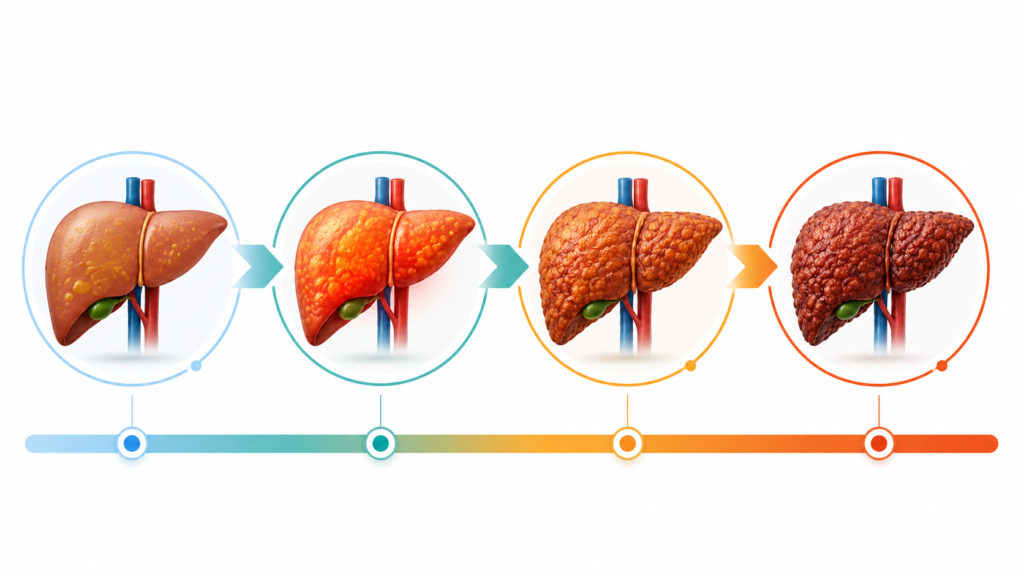
Fatty liver doesn’t turn dangerous overnight. It is a slow, multi-stage journey that can take years, giving you plenty of time to turn things around—if you catch it early.
[Stage 1: Fatty Liver]
Because the early stages are completely silent, many people miss their best window of opportunity to reverse the condition easily with simple lifestyle shifts.
How Rogtham Can Partner in Your Recovery
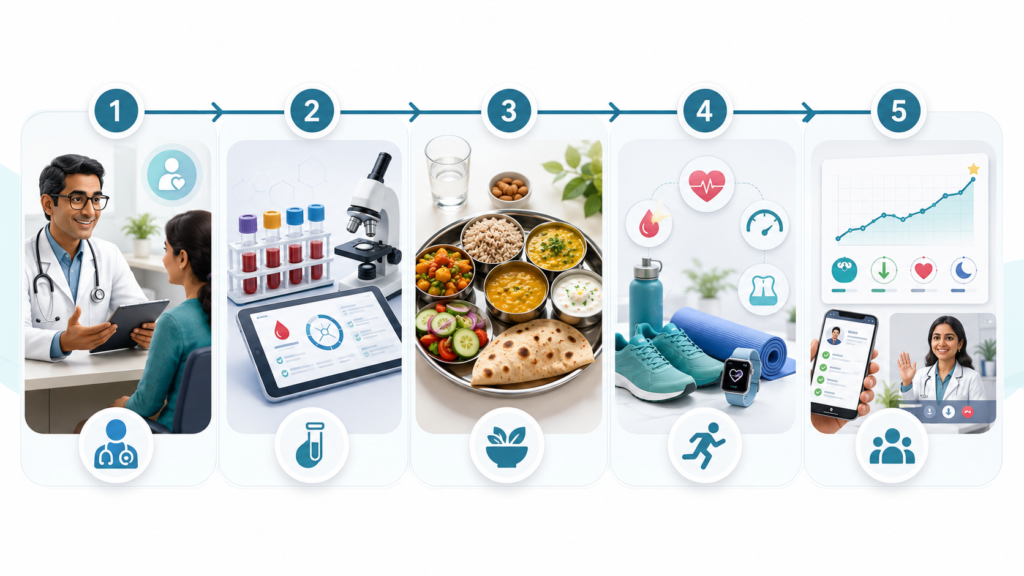
At Rogtham, we don’t treat fatty liver as just an isolated liver problem. We look at it for what it truly is: a reflection of your overall metabolic health, your daily habits, and your unique lifestyle.
We know that handed-down advice like “just eat less and walk more” is hard to sustain. True liver care requires a personalized, comprehensive approach.
Here is how Rogtham helps you regain control:
- Complete Liver & Metabolic Evaluation: Looking at the big picture, not just a single lab value.
- Root-Cause Analysis: Figuring out exactly why your body is storing excess fat in your liver.
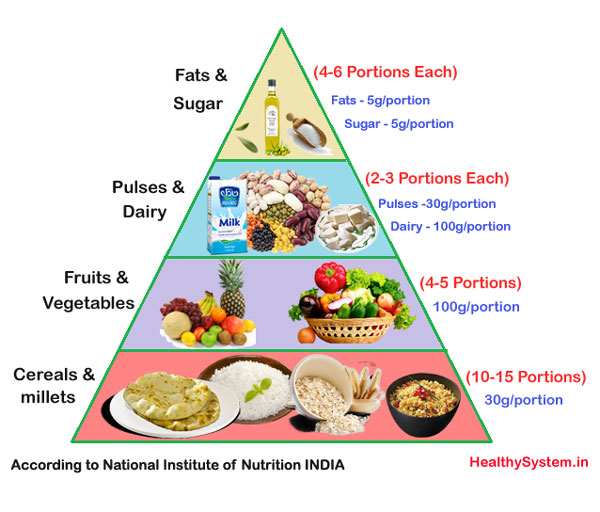
- Practical Dietary Guidance: Tailoring a food plan that fits into your busy routine without making you feel miserable.
- Metabolic Management: Helping you manage interconnected issues like blood sugar, cholesterol, and blood pressure.
- Consistent Monitoring & Support: Keeping you on track so you can watch your liver health actively improve.
Conclusion: Listen to Your Liver’s Quiet Whisper
Your liver works tirelessly for you every single day—filtering toxins, generating energy, and keeping your body running smoothly without demanding your attention. It doesn’t ask for much, but when it starts storing excess fat, it’s giving you a quiet warning.
The good news? Early-stage fatty liver is highly reversible. With the right guidance, a few intentional tweaks to your plate, and regular movement, you can give your liver the clean slate it deserves.
Don’t wait for loud symptoms to finally take action.

Concerned about your liver health or an ultrasound report? Book a personalized consultation with Rogtham today, and let’s take the first step toward a healthier, lighter you.
Frequently Asked Questions About Liver Health
Q: CanFatty Liver Grade 1 be cured completely? A: Yes. Fatty liver Grade 1 is an early warning sign and is highly reversible through targeted weight loss, dietary changes, and increased physical activity.
Q: Is mild fatty liver dangerous if I don’t drink alcohol? A: While “mild,” it is not harmless. If ignored, non-alcoholic fatty liver can quietly progress to liver inflammation, permanent scarring (fibrosis), and eventual liver cirrhosis.